A brown crochet bag can be warm, polished and practical at the same time. The color family ranges from pale oatmeal and toasted almond to mahogany and espresso, so it works with relaxed summer linen, autumn layers and everyday denim. Brown also lets stitch texture become the main feature: bobbles, ribs, granny squares and diagonal ridges all show clearly without requiring a bright palette.
This collection presents 15 distinct DIY directions rather than one repeated tote shape. You will find structured shoppers, compact crossbody bags, a market net, a bucket backpack and smaller evening styles. Each idea includes a construction focus, a useful yarn suggestion and the detail that makes the finished bag look intentional.
Table of contents
- 1. Espresso Bobble Stitch Tote
- 2. Chestnut Bucket Bag
- 3. Caramel Chevron Messenger
- 4. Walnut Granny Square Shopper
- 5. Hazelnut Half-Moon Saddle Bag
- 6. Mocha Ribbed Crossbody
- 7. Toasted Almond Drawstring Pouch
- 8. Mahogany Square-Bottom Tote
- 9. Cinnamon Square Motif Handbag
- 10. Raw Umber Market Net Bag
- 11. Dark Chocolate Flap Clutch
- 12. Rust-Tinted Boho Fringe Bag
- 13. Oatmeal Textured Flap Purse
- 14. Sandy Beige Bucket Backpack
- 15. Pecan Twisted Cord Handbag
How to choose your brown crochet bag
Start with the way you plan to use the bag. Cotton and cotton cord suit market bags, totes and structured purses because they resist stretching. Softer blends work well for slouchy crossbody bags and drawstring pouches. Pale browns highlight texture but may show marks sooner; deeper coffee shades are forgiving for everyday use. If the project will carry more than a phone and wallet, plan the lining, base support and handle reinforcement before you crochet the final round.
1. Espresso Bobble Stitch Tote
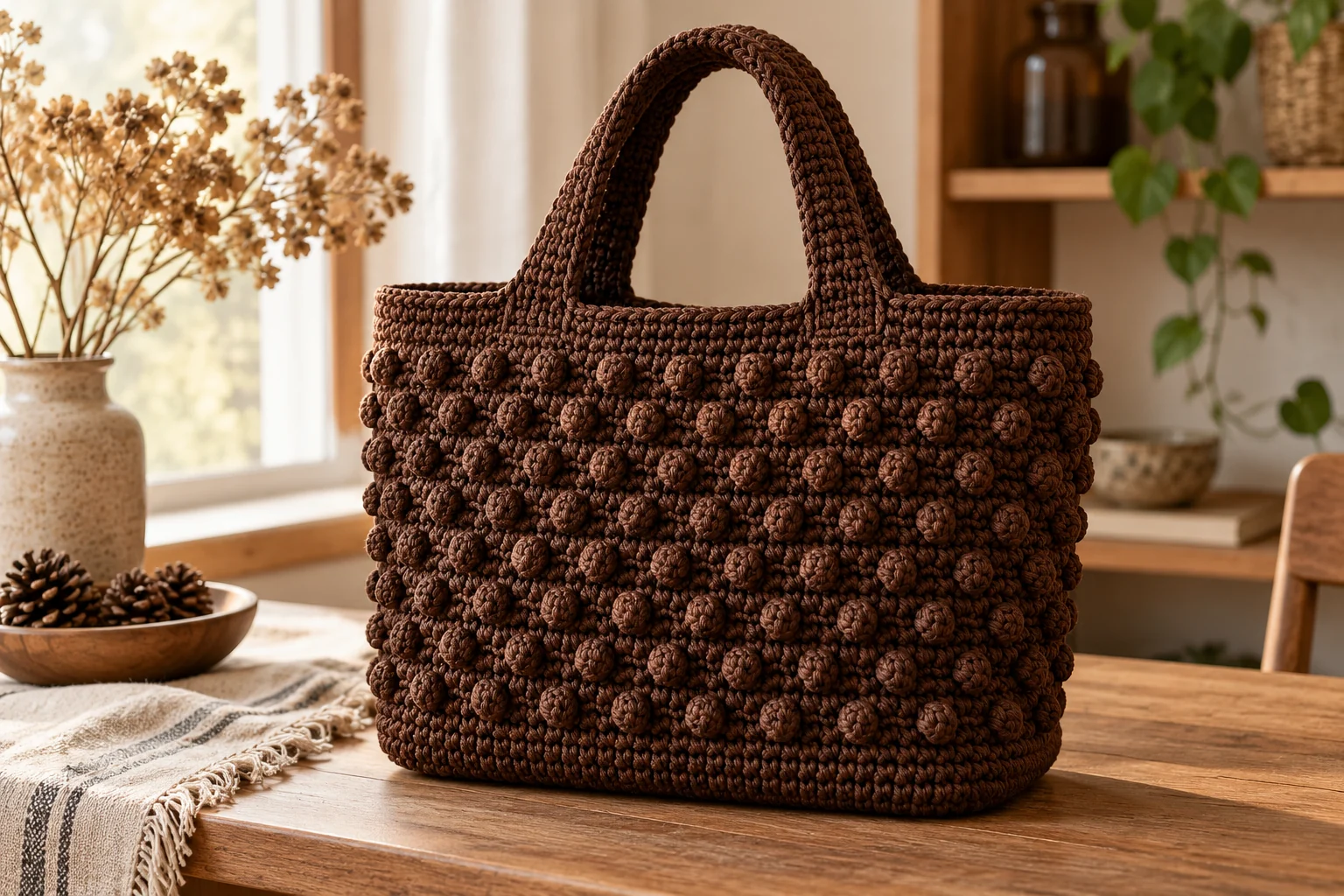
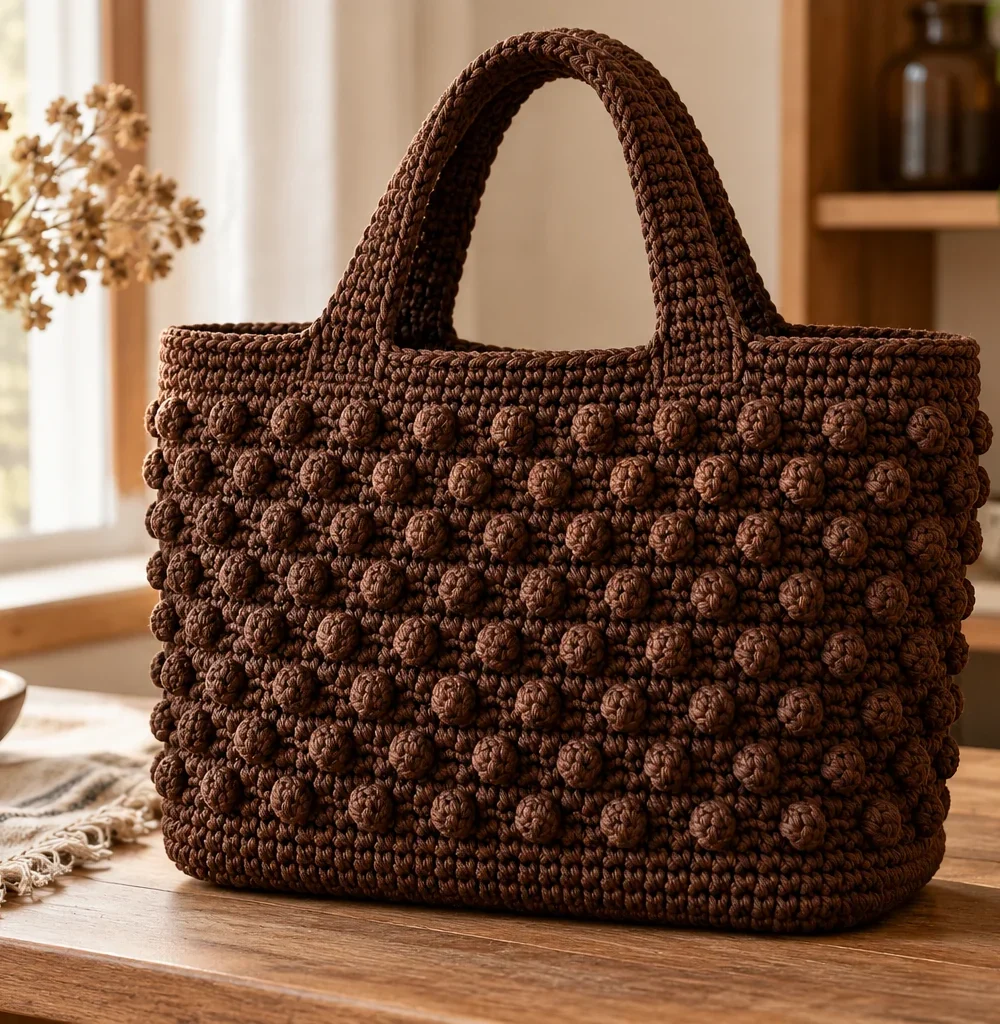
A deep espresso tote is an easy way to make a brown crochet bag feel rich and intentional. The raised bobble pattern gives the front and back panels enough detail to stand on their own, while plain single-crochet side panels keep the silhouette tidy. Work the base with a smaller hook than the decorative panels so it stays firm when the bag is filled. A smooth upper band also gives you a stable place to attach the handles.
Choose mercerized cotton or a cotton blend with a tight twist. It will show every bobble clearly and resist the fuzziness that can soften a highly textured design. For comfortable handles, crochet around cotton cord or add a fabric strip inside each strap before closing the seam.
Maker’s key: Keep every bobble the same height and space them in a measured grid.
2. Chestnut Bucket Bag

The bucket shape works beautifully in chestnut brown because the warm color emphasizes the rounded form. Begin with a flat circular base, then stop increasing and work the body upward in dense waistcoat stitch. The fabric should feel firm enough to stand when empty without becoming stiff. Finish the opening with reinforced eyelets and a smooth drawstring that closes without catching the stitches.
A removable crossbody strap makes the bag easier to use, while a short wrist handle gives it a dressier option. Line the interior with cotton poplin and add one small slip pocket before sewing the lining into place.
Maker’s key: Count the base increases carefully so the bottom stays flat instead of cupping.
3. Caramel Chevron Messenger

Caramel, cream and dark mocha turn a classic chevron into a wearable neutral pattern. Crochet the front, back and flap as one long piece so the zigzags continue cleanly over the top of the bag. Separate gusset and strap pieces add depth without interrupting the color rhythm. A magnetic snap hidden beneath the flap keeps the exterior simple and secure.
Plan the stripe sequence before starting and carry unused colors only when the distance is short. For wider sections, cut and join neatly at the edge to avoid bulky floats. A plain dark-brown gusset frames the chevrons and protects the lighter yarn along the base.
Maker’s key: Swatch the chevron repeat so the finished panel reaches the intended width.
4. Walnut Granny Square Shopper
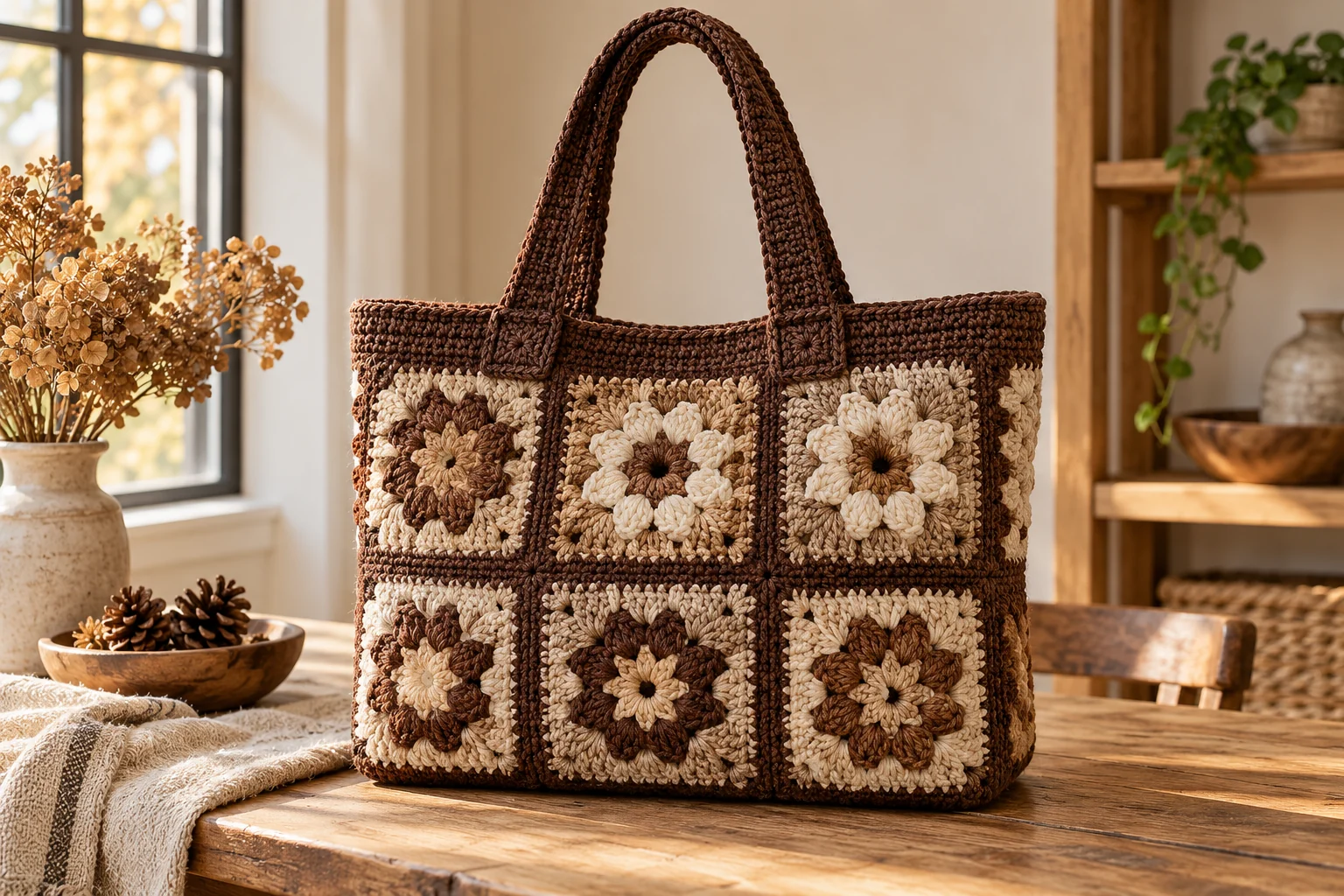
Floral granny squares feel modern when the palette stays close to walnut, sand, taupe and cream. Make each square to the same finished measurement, block them before joining, and arrange the motifs on a table before assembly. A flat slip-stitch join gives the shopper crisp seams, while a solid crochet band around the opening controls stretch.
Use a canvas lining if the flower centers have open spaces. The lining supports the square seams and prevents keys or pens from slipping through. Extend the handles several inches down the inside of the bag so the weight is shared across more than the top edge.
Maker’s key: Block every square to one template before joining the bag.
5. Hazelnut Half-Moon Saddle Bag
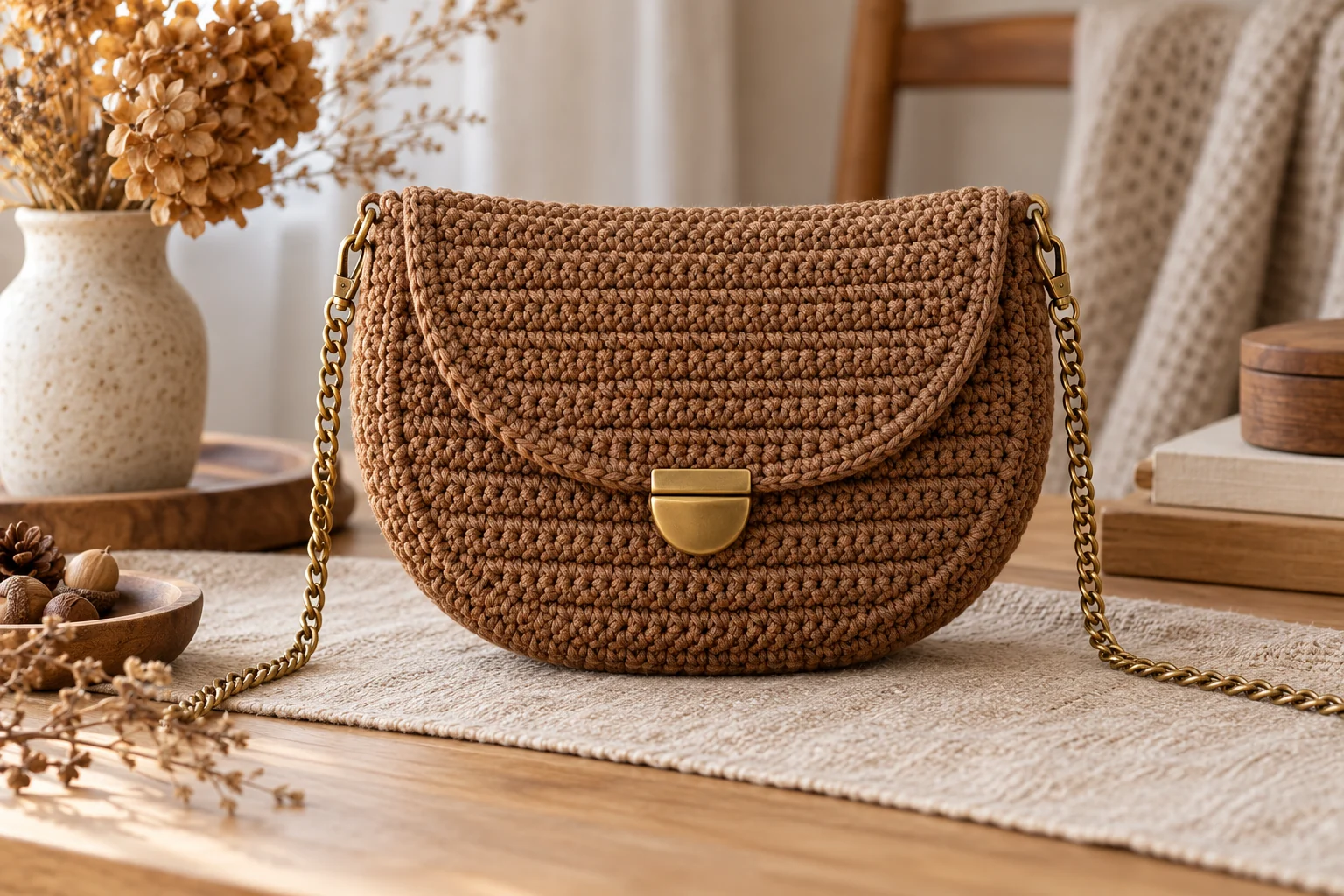
A half-moon saddle bag gives brown yarn a polished, compact shape. Crochet two matching semicircular panels in continuous rows, then join them with a narrow gusset. Back-loop stitches create quiet horizontal ribs that follow the curve without making the surface busy. A shaped flap and small metal closure complete the tailored look.
The curved panels must match exactly, so mark the first and last stitch of every row. Add a thin stabilizer between the crochet and lining if you want the bag to hold its arc. A chain strap threaded with matching yarn feels refined and keeps metal links from rubbing clothing.
Maker’s key: Increase symmetrically so both half-moon panels lie flat.
6. Mocha Ribbed Crossbody
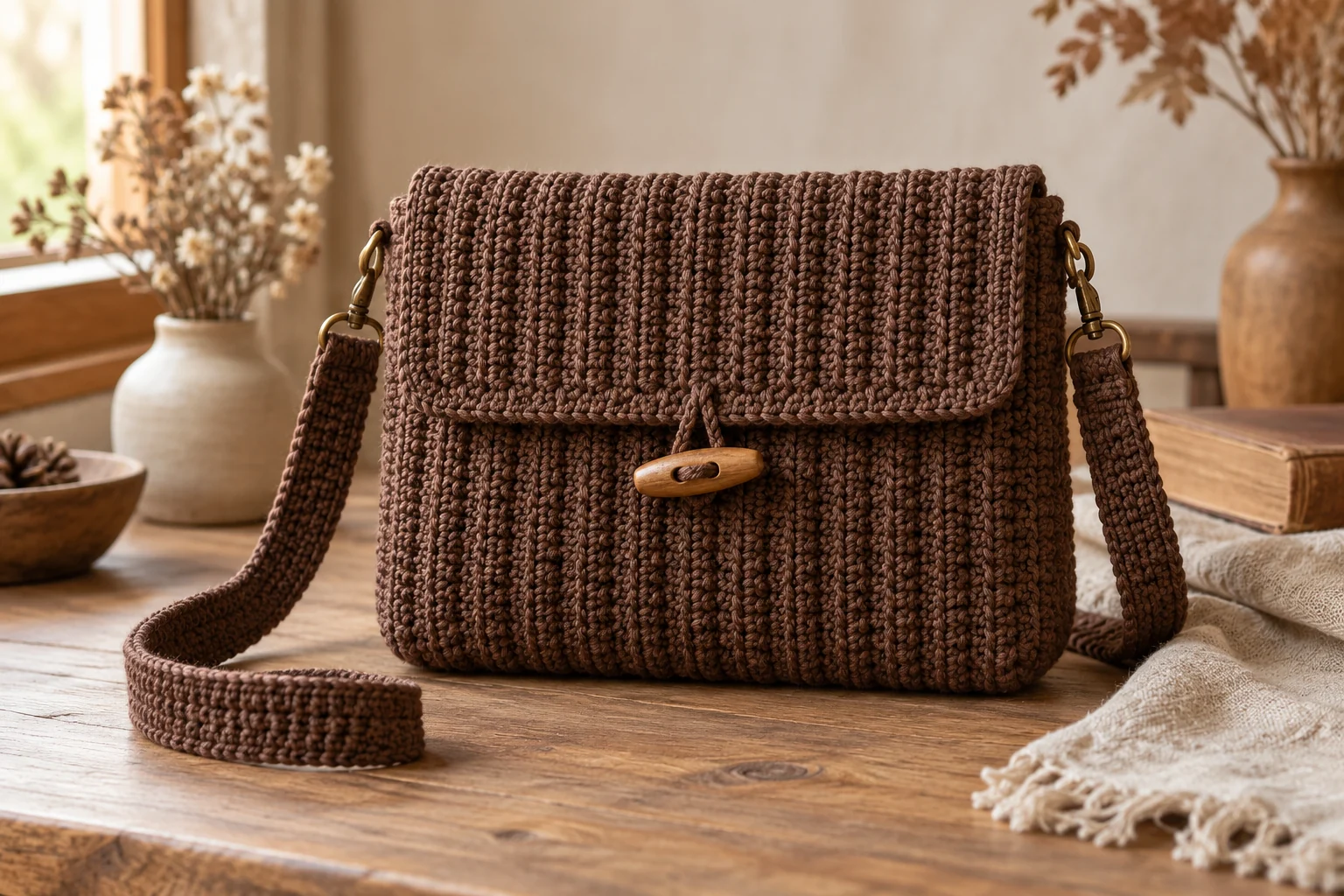
Vertical ribbing makes a simple mocha crossbody look clean and contemporary. Work a rectangle in back-loop half-double crochet, fold it to form the front and back, and add narrow side panels for useful depth. Turning the rib direction vertically helps the bag appear taller and gives the surface a soft knitted character.
Keep the turning chain relaxed so the edges remain straight. Before assembly, steam-block the main panel lightly and measure both sides. A wooden toggle, short flap and adjustable strap are enough detail for this minimalist design.
Maker’s key: Use an edge stitch count marker to prevent the rectangle from narrowing.
7. Toasted Almond Drawstring Pouch
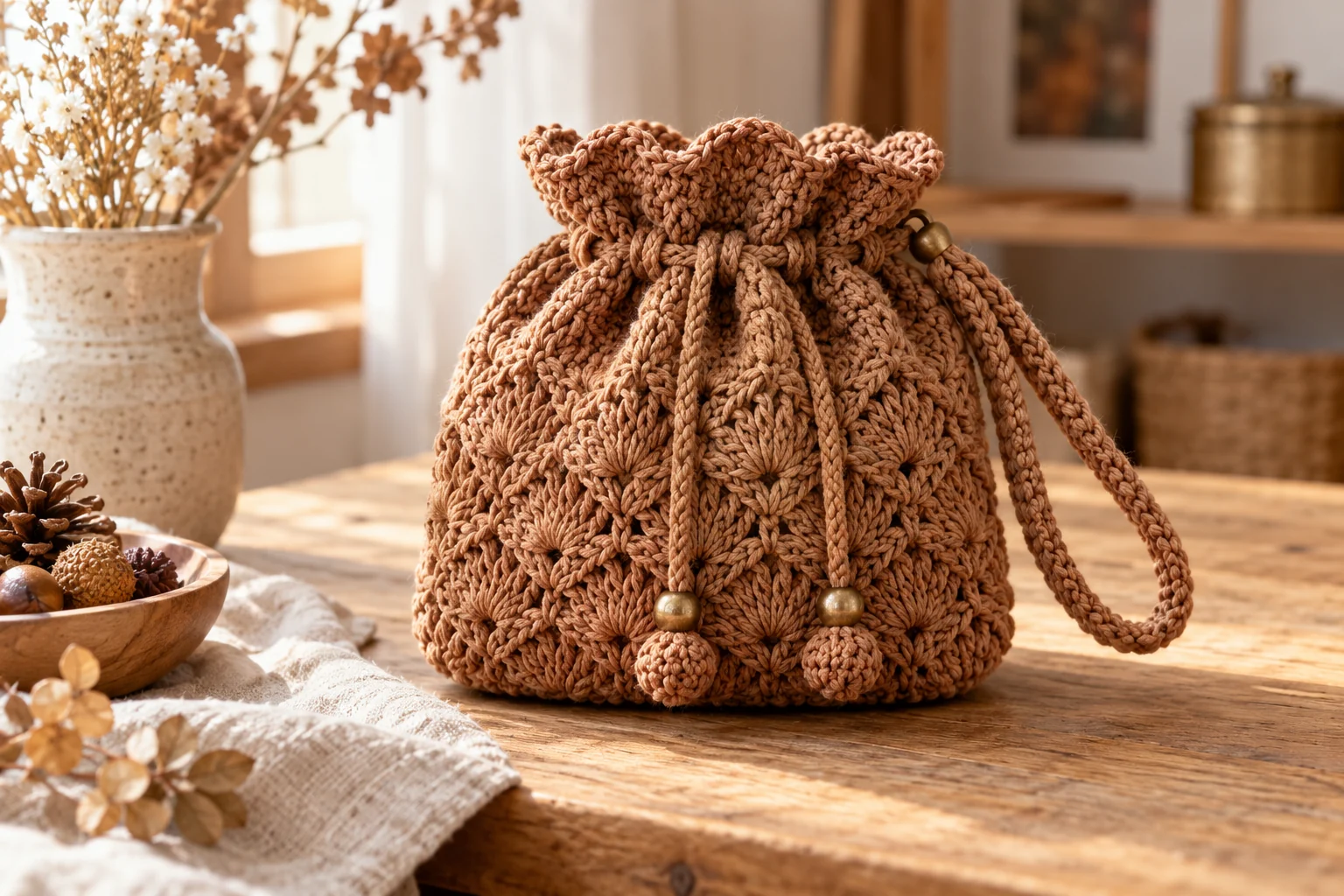
This soft drawstring pouch is a practical small project for leftover neutral yarn. Start with an oval or round base, build the sides in a lightly textured stitch, and finish with an eyelet round below the scalloped edge. The toasted-almond shade makes the shape feel delicate without limiting it to one season.
A bamboo-cotton yarn gathers more easily than a stiff cord, so the opening closes smoothly. Make two cords, thread them from opposite directions, and knot or cap the ends. Add a small fabric circle at the base if you plan to carry jewelry or other tiny items.
Maker’s key: Measure the drawstring channel so both cords slide without friction.
8. Mahogany Square-Bottom Tote
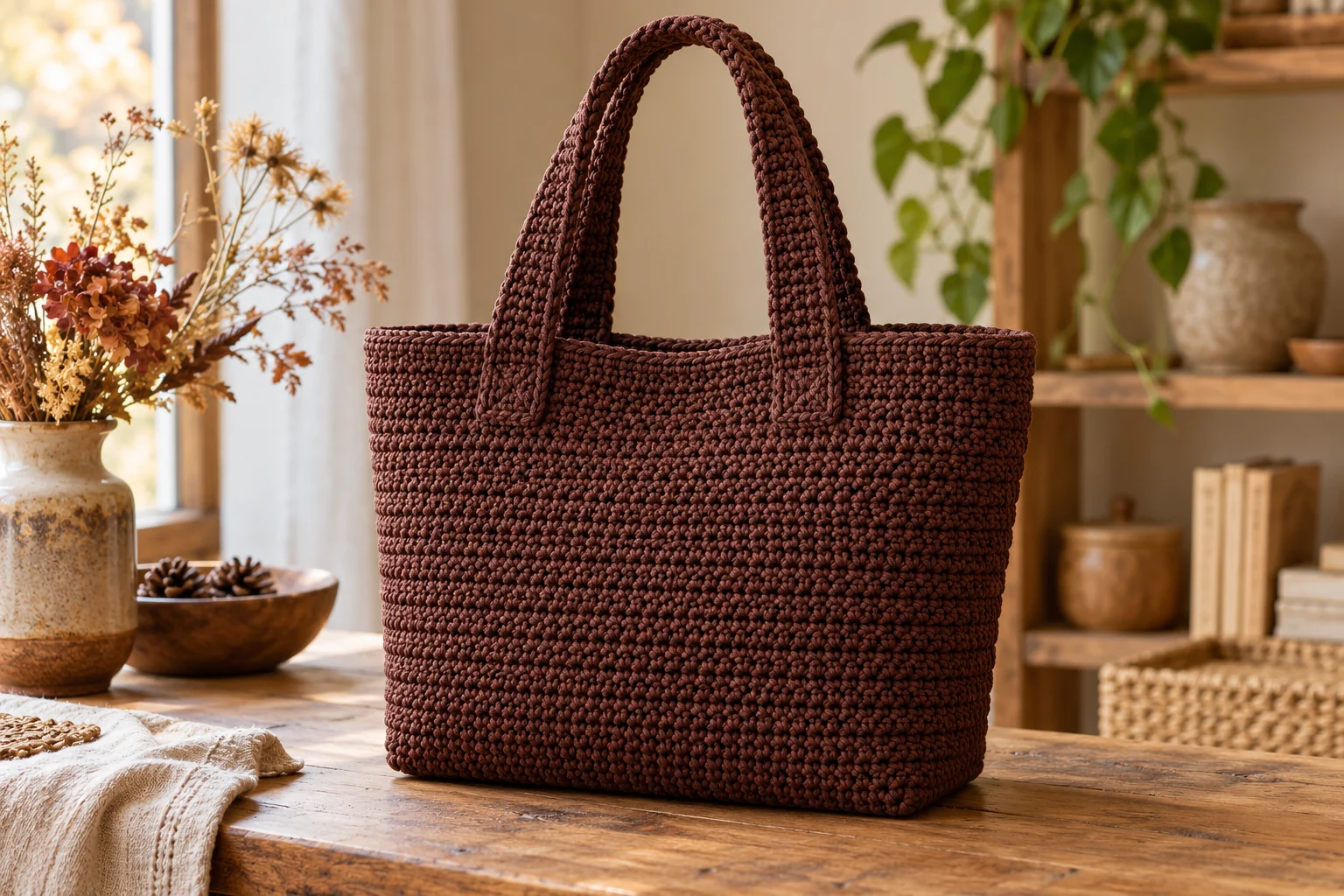
A deep mahogany tote is the dependable option in this collection. Its rectangular base distributes weight evenly, and dense side panels help it stand upright. Crochet the base in firm single crochet, work a defined turning round through the back loops, then continue the walls without increases. That sharp transition creates the square-bottom shape.
For grocery or work use, place a cut-to-size plastic canvas insert between the lining and crochet base. Reinforce the upper band with two extra rounds and attach handles through several rows rather than a single edge.
Maker’s key: Stabilize the base before adding the lining to stop loaded corners from drooping.
9. Cinnamon Square Motif Handbag
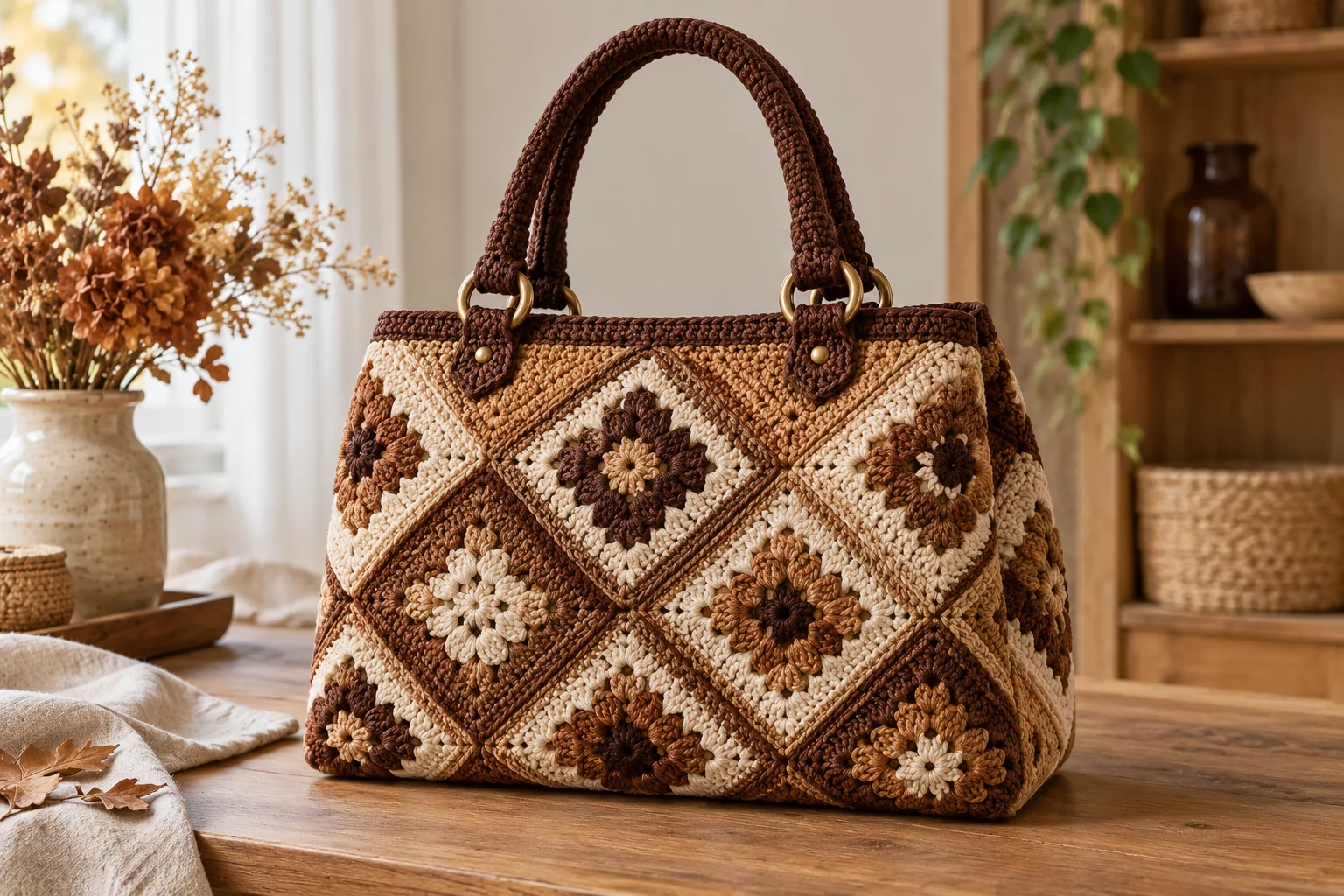
Cinnamon and beige square motifs create a geometric handbag that still reads as a neutral. Use two motif variations and alternate their placement to give the surface movement. Join the squares in strips, connect the strips into front and back panels, and frame each panel with a solid border before adding the gusset.
A join-as-you-go method saves finishing time, but a flat-seam join offers more control for a structured handbag. Lay out every square before sewing and photograph the arrangement so the pattern does not shift during assembly.
Maker’s key: Match motif dimensions precisely so the gusset attaches without rippling.
10. Raw Umber Market Net Bag
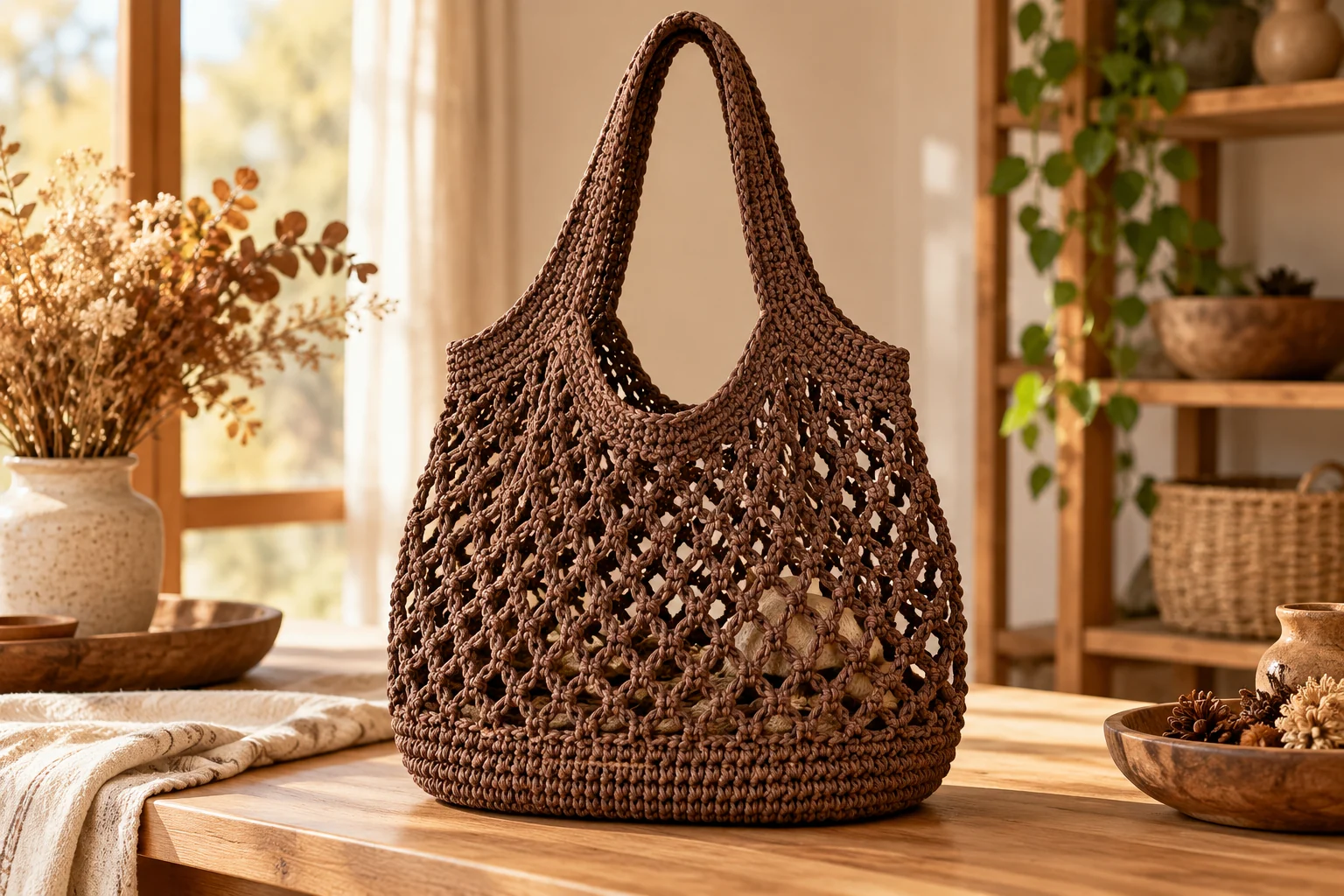
An open mesh market bag becomes more versatile in raw umber, a brown that hides everyday marks while still feeling natural. Begin with a solid round base to support produce, switch to a repeating chain mesh for the body, and return to solid stitches for the upper band. The change in stitch density gives the bag structure exactly where it needs it.
Use non-mercerized cotton for grip and durability. Stretch the finished mesh gently before deciding the handle length because the body will grow when loaded. Wide shoulder straps are more comfortable than narrow cords and spread the weight across the upper band.
Maker’s key: Reinforce the final mesh round before beginning the handles.
11. Dark Chocolate Flap Clutch
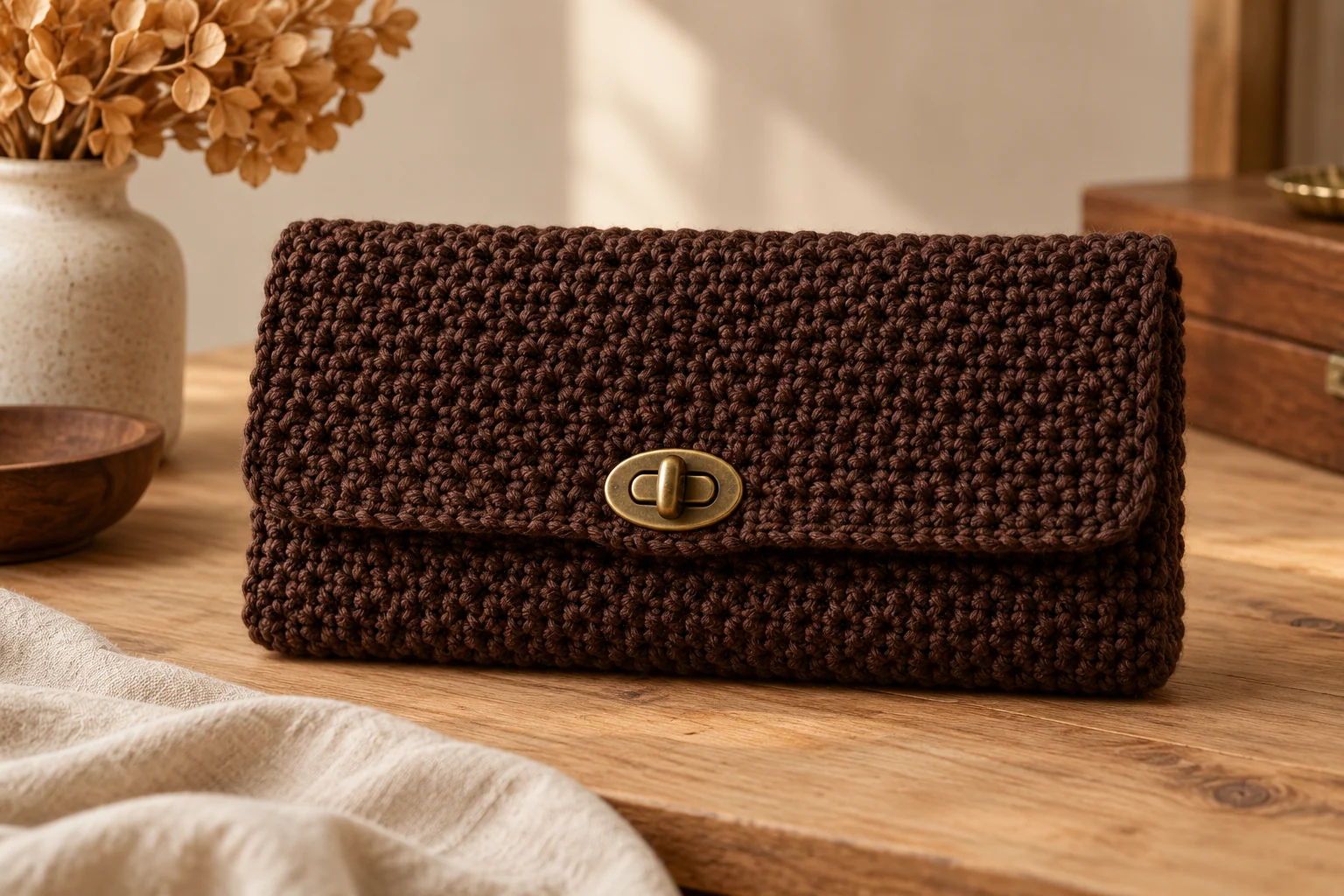
Dark chocolate yarn gives a compact clutch an evening-ready finish. Dense moss stitch keeps the surface flat and reduces gaps, while a single long rectangle can form the back, front and flap with minimal seaming. Round the flap corners gradually and add a discreet brass closure at the center.
A fitted fabric lining is essential for this design because it prevents the slim clutch from stretching around its contents. Fuse lightweight interfacing to the lining, sew the pocket and zipper if desired, then hand-stitch the finished insert just below the crochet edge.
Maker’s key: Build the lining to the finished crochet measurements, not the original stitch count.
12. Rust-Tinted Boho Fringe Bag
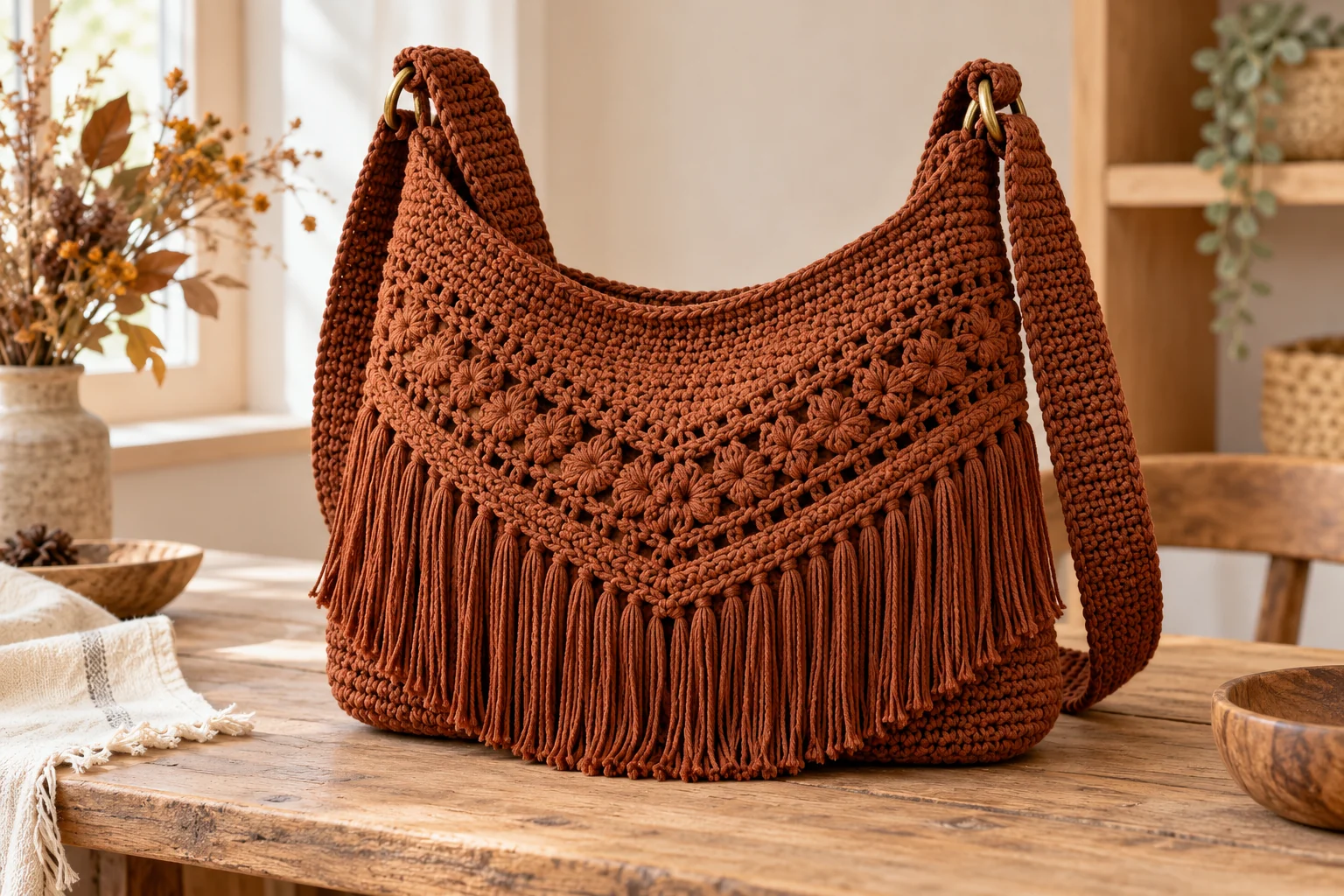
Rust brown brings warmth to a relaxed bohemian shoulder bag. Crochet the main body in a sturdy textured stitch, add a decorative openwork band near the lower third, and attach fringe through that band. Keeping the top half solid protects the contents and gives the strap a stronger attachment area.
Cut all fringe strands around the same measuring card, attach them evenly, then steam and trim the lower edge only after the bag has hung overnight. A wide shoulder strap balances the movement of the fringe and feels more comfortable during long outings.
Maker’s key: Let the fringe settle before the final trim for a level finish.
13. Oatmeal Textured Flap Purse
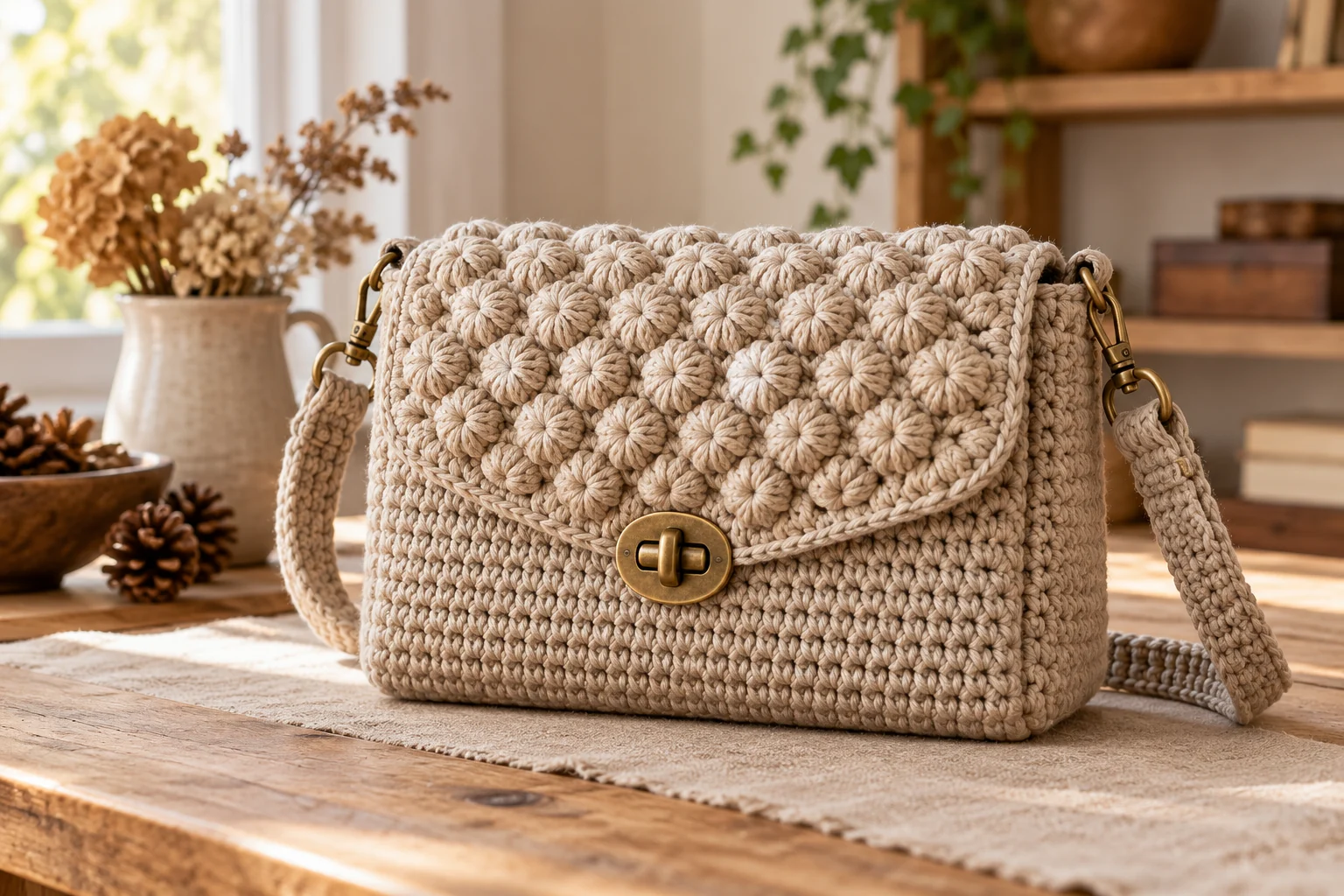
Oatmeal is a gentle alternative to white and makes raised texture easy to see. Keep the purse body in plain dense stitches, then reserve puff stitches for the flap so the design has one clear focal point. A compact rectangular shape and antique-brass turn lock make the finished bag useful throughout the year.
Puff stitches can consume much more yarn than they appear to, so complete the flap before cutting the main color. Line the purse with tightly woven cotton in a similar tone and add a narrow stabilizer inside the flap to support the closure.
Maker’s key: Pull every puff to the same height so the flap closes evenly.
14. Sandy Beige Bucket Backpack

A sandy-beige bucket backpack combines a neutral color with hands-free function. Build a reinforced oval base, work the body in tight single crochet, and place the drawstring eyelets below a shaped flap. Two adjustable straps distribute weight more effectively than a single long cord and make the bag comfortable for everyday use.
Double-strand the yarn for the straps or crochet each strap around cotton webbing. Anchor them to the base and upper back panel with reinforced squares of stitching. A full lining protects the crochet from pens, chargers and other hard-edged items.
Maker’s key: Reinforce every strap attachment from inside the lining and crochet shell.
15. Pecan Twisted Cord Handbag
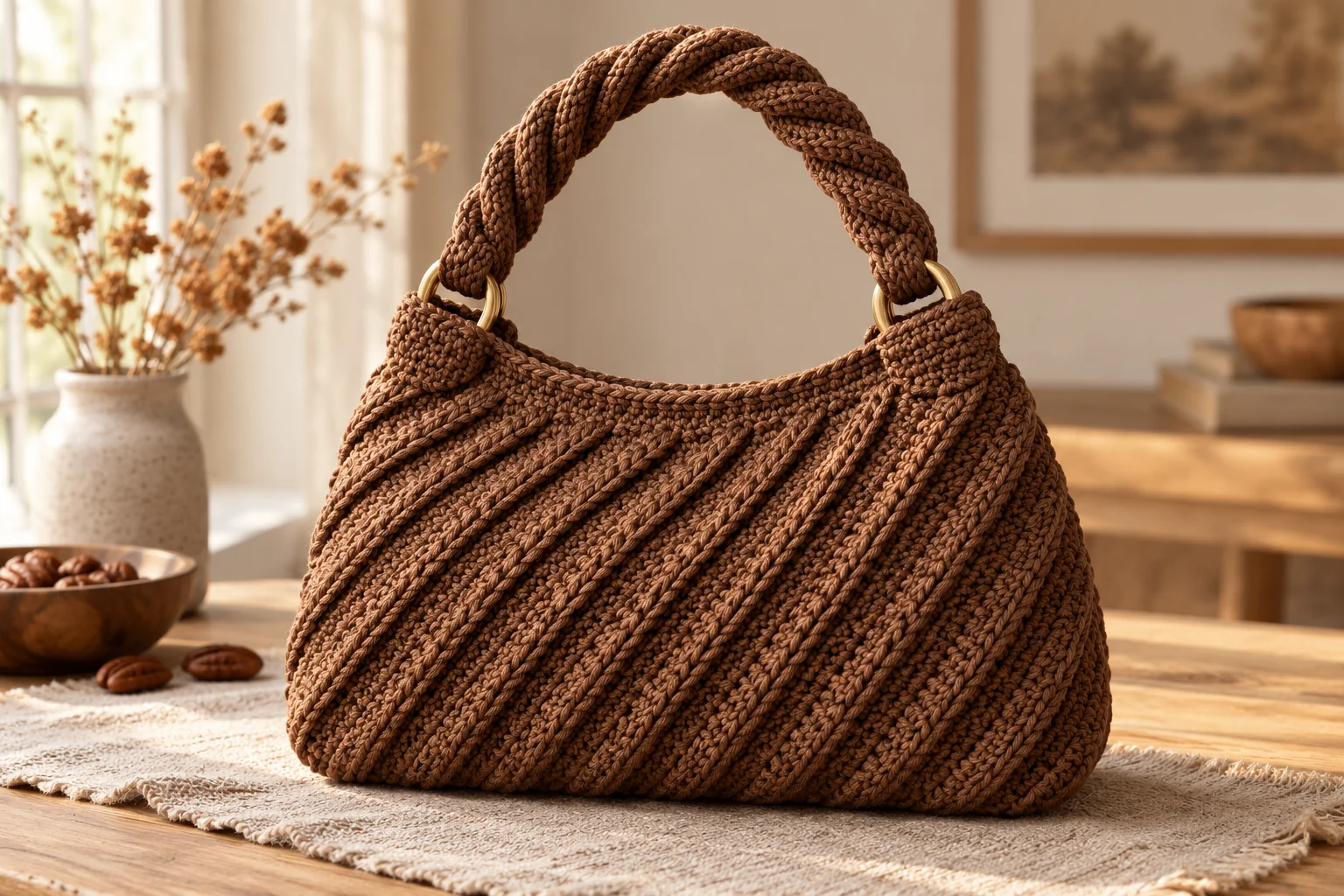
Diagonal ridges give this pecan handbag a distinctive boutique look without adding extra colors. Use a crossed or twisted stitch repeat across two matching panels, then frame the texture with plain side and base pieces. A thick twisted top handle echoes the diagonal movement and keeps the design cohesive.
Textured repeats show errors quickly, so place a marker at each repeat boundary and count before moving to the next row. Block the panels to identical dimensions, add a structured lining, and secure the handles through both the crochet and an internal support tab.
Maker’s key: Track every repeat so the diagonal lines meet cleanly at the side seams.
Frequently asked questions
What yarn is best for a durable brown crochet bag?
Firm cotton, mercerized cotton, cotton cord and sturdy cotton blends are dependable choices. They create clear stitches and stretch less than many soft garment yarns. Test the yarn with the stitch pattern because a dense stitch can change the fabric more than the fiber label suggests.
How do I stop a crochet bag from sagging?
Use a tighter gauge, reinforce the base, add a non-stretch lining and extend handles down the bag body. A plastic-canvas base insert is especially useful for square-bottom totes. Strap attachment points should pass through the lining or an internal support tab.
Should every crochet bag have a lining?
Not every bag needs one, but linings improve shape, protect seams and keep small objects from escaping through open stitches. Mesh market bags can remain unlined, while purses, backpacks and motif bags usually benefit from a fitted fabric interior.
Which brown shade is easiest to style?
Mid-tone chestnut, walnut and caramel are the most flexible because they work with cream, denim, black, olive and rust. Espresso feels formal, while oatmeal and sandy beige create a lighter neutral look.
How can I make the handles stronger?
Crochet around cotton cord or webbing, use low-stretch stitches and attach the handles through several rows. For more options, read our guide to strong crochet bag handles.
The bottom line
The best brown crochet bag is the one whose structure matches its purpose. Choose bobbles or motifs when you want visible craft, ribs and moss stitch for a quieter finish, and mesh when light weight matters most. A thoughtful base, reinforced handles and a fitted lining will do more for the final result than adding complicated decoration. Pick the shade and silhouette you will actually carry, make a sturdy swatch, and build the bag from the foundation upward.
For more planning help, compare the best yarns for crochet bags and learn how to add a clean fabric lining.