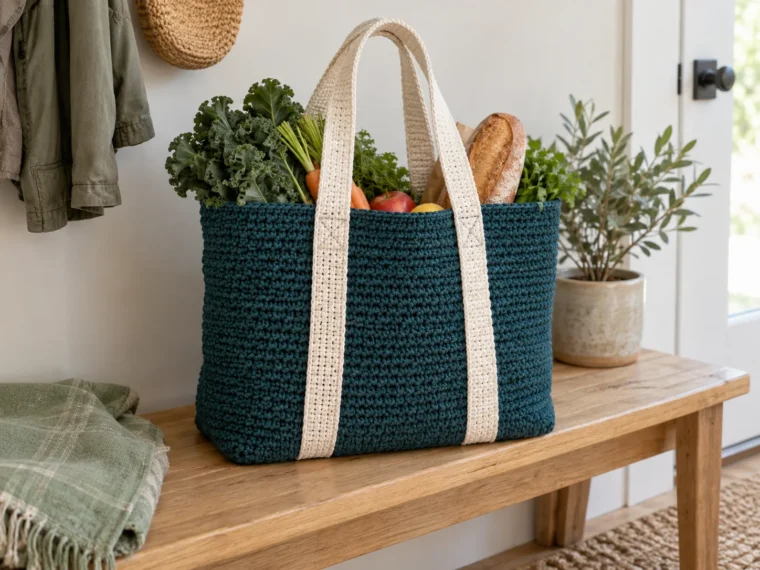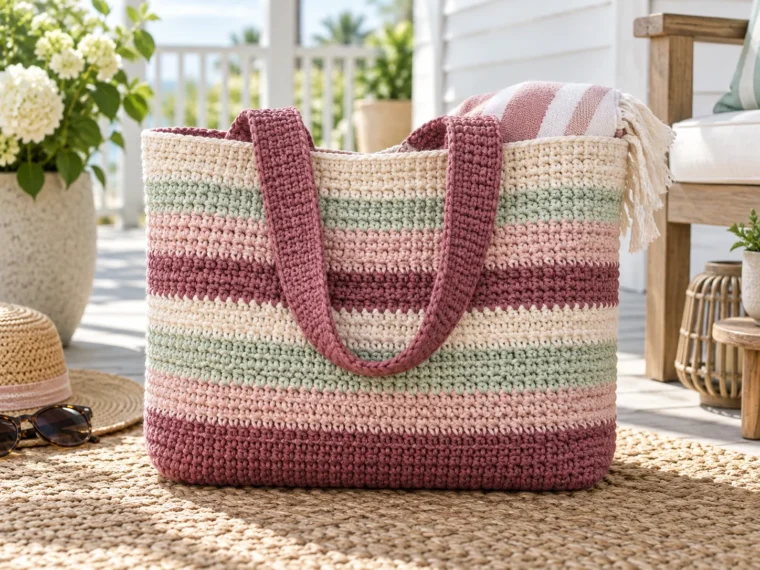
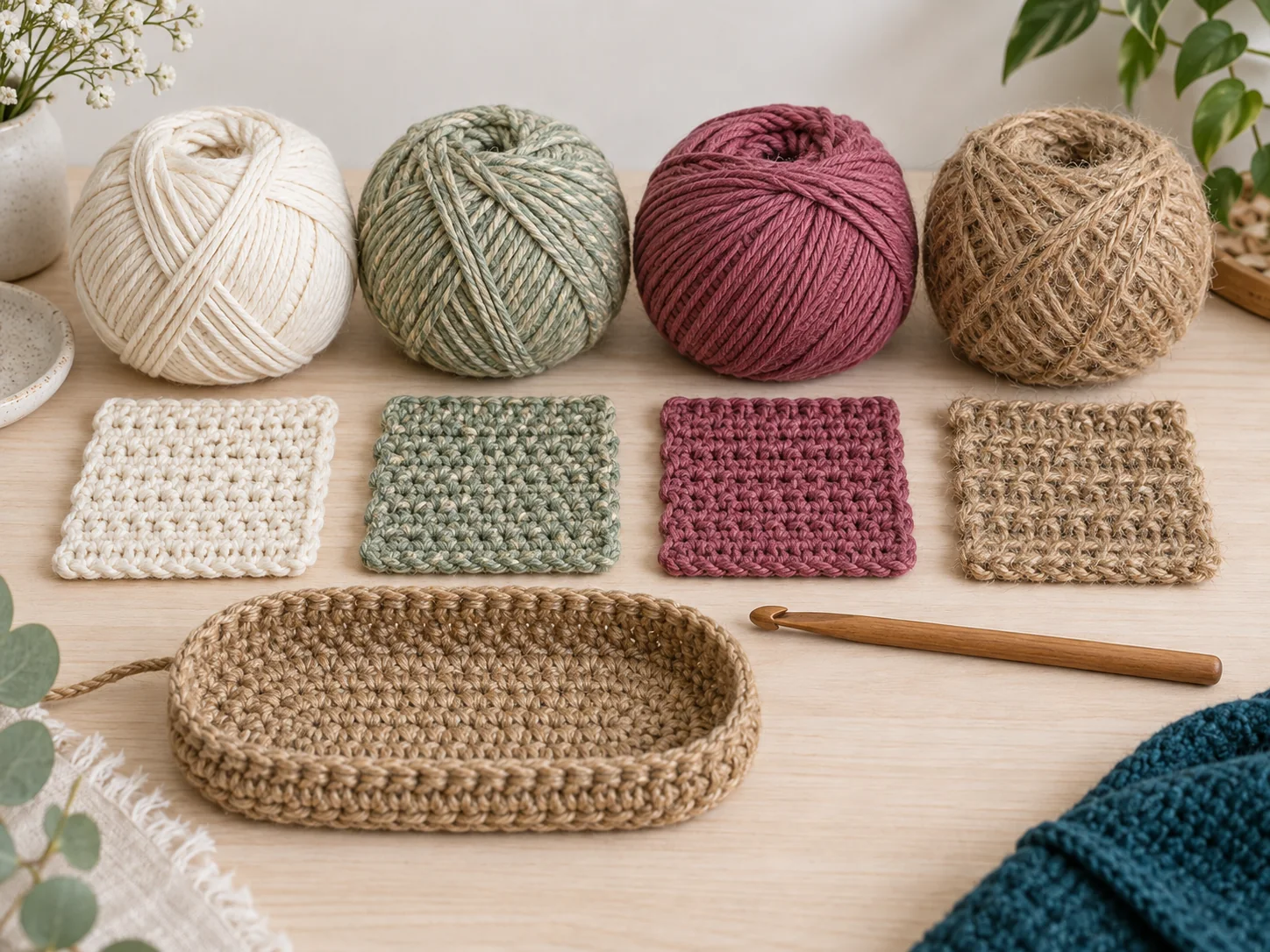
The best yarn for a crochet bag depends on what the bag must carry. A market bag should be light and washable, a structured handbag needs firm stitch definition, and a soft pouch can tolerate more drape. Fiber matters, but construction, gauge and lining matter too.
Start with the bag’s job
Before shopping, answer four questions:
- Will the bag carry light personal items or heavy groceries?
- Should it fold small or hold a defined shape?
- Will it be washed often?
- Will the yarn touch bare skin at the handles?
These answers are more useful than choosing by color alone. A beautiful soft yarn may be uncomfortable under load, while a firm utility yarn may feel too rough for a shoulder bag.
Cotton: the reliable all-purpose choice
Cotton offers crisp stitches, good heat resistance and straightforward washing. It has less elastic recovery than wool, so a loose cotton bag can gradually lengthen, but a dense gauge and lining control that movement.
Choose smooth, tightly plied cotton for everyday totes and motif bags. Mercerized cotton has shine and strength but can feel slippery. Recycled cotton varies more in thickness, so swatch before committing to a precise pattern.
Best for: totes, market bags, granny-square bags and lined handbags.
Cotton blends: balance weight and recovery
A cotton-acrylic blend is often lighter than pure cotton and may recover slightly better after stretching. Check the label because proportions differ. A blend with a firm twist works well for large bags; a very soft blend may still sag.
Cotton-linen blends create a strong, textured fabric but can feel stiff during the first rows. Linen softens with use and washing. Make a handle swatch and rub it against your hand before using it for a long shoulder strap.
Best for: large totes, summer bags and projects where pure cotton feels too heavy.
Acrylic: affordable, colorful and more elastic
Acrylic is widely available, easy to wash and offered in many colors. Its main drawback for bags is stretch, especially in long handles and open mesh. Heat can permanently change acrylic, so follow the yarn label when blocking.
Use a smaller hook, dense stitch and fabric lining when choosing acrylic for a structured bag. It performs better in compact pouches, decorative motif bags and projects that carry light items.
Best for: color-focused bags, practice projects and light-use accessories.
Jute, raffia and paper yarn
Plant cords and raffia produce crisp, structured shapes. They can be abrasive on hands, difficult to unravel and sensitive to moisture. Jute also sheds fibers, so it may need a lining.
Use an ergonomic hook, take breaks and avoid pulling each stitch excessively tight. Check whether the material can be washed before using it for groceries or beach items.
Best for: baskets, structured summer handbags and occasional-use statement bags.
Yarn weight and finished-bag weight
Worsted-weight yarn is a practical starting point: it is thick enough for structure without making every bag heavy. DK yarn produces a lighter fabric and suits folded market bags. Bulky yarn works quickly but can create a heavy bag before anything is placed inside.
Two strands held together can create firmness, but they also increase yarn use and weight. Weigh the first completed panel and estimate the total before continuing.
Twist, pilling and abrasion
A bag rubs against clothing, furniture and the ground. Choose yarn with a firm twist and a smooth surface. Loosely spun singles and fuzzy novelty yarns pill more quickly and hide stitch wear.
Make a 4 in / 10 cm swatch, rub it firmly against denim for thirty seconds, and inspect the surface. Then hang a 1 lb / 450 g weight from the swatch for ten minutes and measure how much it lengthens. This simple test compares candidate yarns more honestly than touching a skein in the store.
Colorfastness and washing
For strong or dark colors, dampen a white cloth and press it against the yarn. If color transfers, wash the yarn or finished bag separately according to the label. This matters when a dark handle rests against light clothing.
Keep the yarn label with project notes. Record fiber content, dye lot, care instructions and the amount used so a repair or second bag is easier later.
How much yarn to buy
Small crossbody bags often use 150–300 yd / 137–274 m of worsted yarn. Medium totes commonly require 500–800 yd / 457–732 m. Large dense bags, long straps and linings made from yarn can exceed 1,000 yd / 914 m.
Always use the pattern estimate first. Buy an additional 10 percent when changing gauge, adding pockets or lengthening handles. For multiple dye lots, alternate skeins every two rows so any color difference blends gradually.
Quick yarn recommendations by bag type
- Foldable market bag: DK or worsted cotton with open mesh.
- Grocery tote: tightly plied worsted cotton or cotton blend at firm gauge.
- Granny-square bag: smooth yarn with clear stitch definition and consistent weight.
- Structured handbag: cotton cord, firm cotton or lined cotton blend.
- Soft mini bag: cotton blend or acrylic at dense gauge.
- Beach bag: washable cotton or blend that tolerates moisture and sand.
Final choice checklist
Choose a yarn that matches the load, feels comfortable at the handle, survives rubbing, can be cared for realistically and creates the gauge the pattern needs. When two options seem equal, make and test a swatch. Ten minutes of testing can prevent hours spent on a bag that stretches after its first outing.