
A handmade bag becomes much easier to plan when you begin with its purpose. A soft hobo bag needs comfortable drape, a market bag needs controlled stretch, and a backpack needs strong attachment points. These five crochet bag ideas cover different shapes, stitch styles and everyday uses so you can choose a project that matches both your wardrobe and your crochet skills.
Each idea includes the best construction approach, yarn advice and the detail that gives the bag a polished finish. Use the colors shown as a starting point or replace them with shades already in your yarn basket.
Table of contents
1. Sage and Cream Hobo Bag
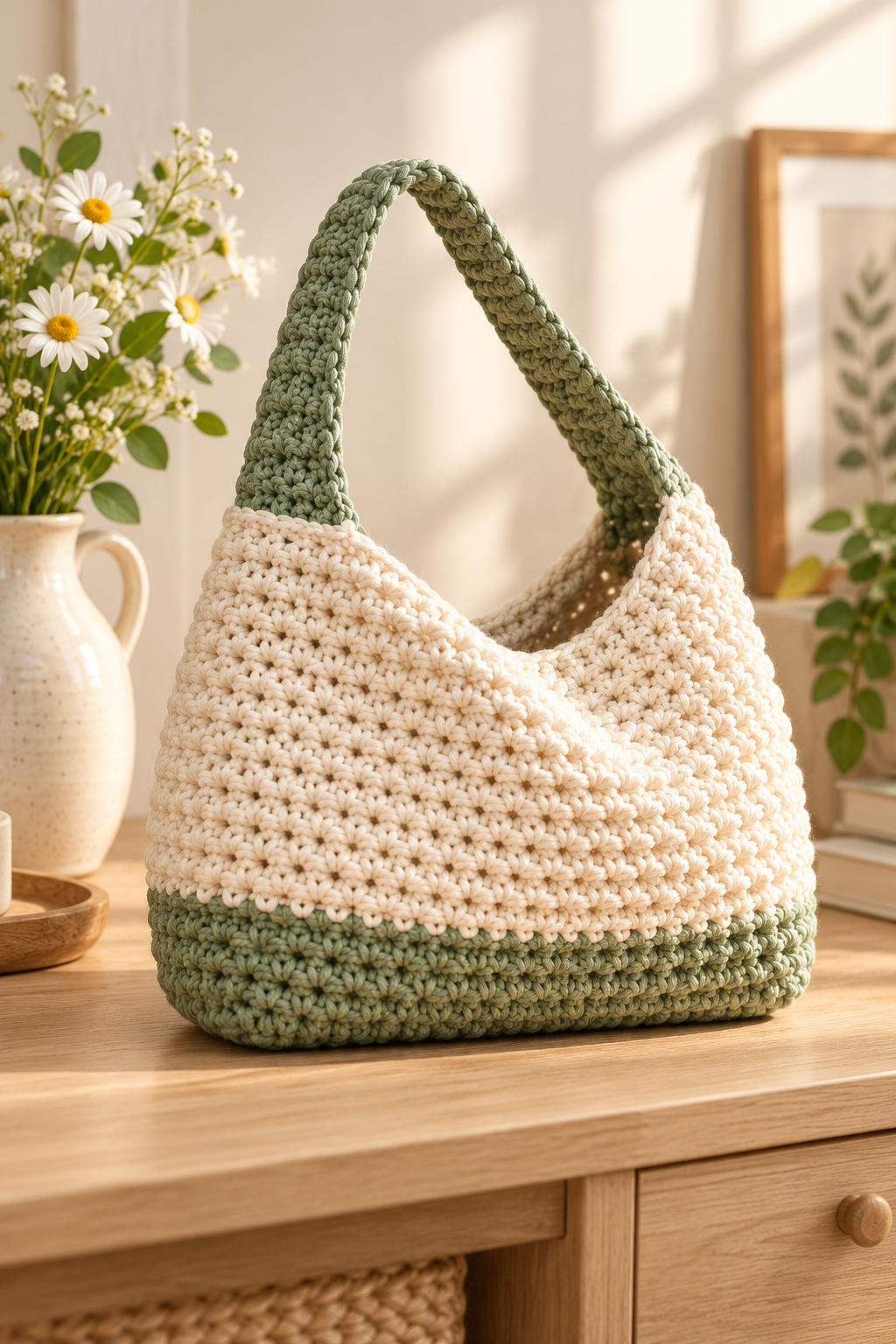
This soft shoulder bag uses an oval sage base, a cream textured body and a wide strap that grows from the upper sides. The uninterrupted strap line is what makes the silhouette look relaxed and modern. Work the base in dense single crochet, then build the body with lemon peel stitch or another low-profile texture. Gradual decreases near the opening create the gentle inward curve.
A firm cotton-acrylic blend gives the body enough drape without letting the bag collapse. Reinforce the strap with slip stitches along both edges and add a simple cotton lining if you plan to carry small items. Because the opening is wide, a magnetic snap or short button tab is a useful finishing detail.
2. Terracotta Granny-Square Tote

Terracotta, cream and muted mustard give classic floral granny squares a warm, current look. Make every square from the same yarn weight, block them to one measurement and arrange the colors before joining. A flat slip-stitch seam produces a tidy grid, while solid crochet rows around the opening help the tote keep its shape.
Use a strong cream yarn for the handles and extend each handle several inches down the inside of the bag. This spreads the weight across multiple squares instead of pulling on the upper edge. A canvas or cotton lining protects the joins and prevents keys from slipping through the open spaces.
3. Blue Striped Market Bag
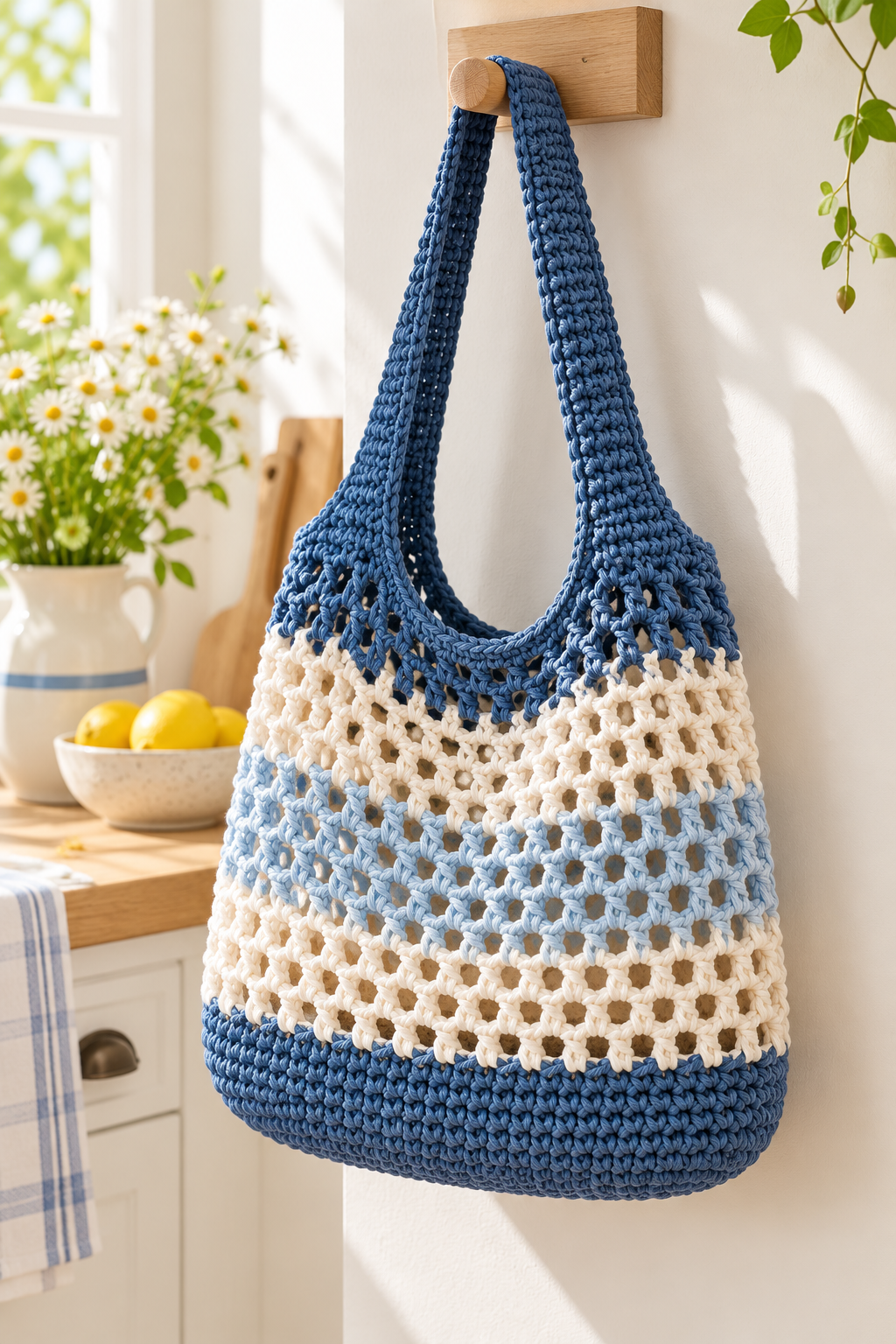
This striped market bag combines a dense navy base with an airy mesh body in cream and pale blue. The open stitch keeps the bag light and lets it expand around produce, towels or yarn. Begin with a flat oval, work several solid rounds, and then switch to chain spaces. Return to solid stitches for the top band before making the handles.
Non-mercerized cotton is practical because it is washable and has enough grip to keep knots secure. Make the handles at least six stitches wide and reinforce their edges after the bag is complete. Always measure handle length after lightly stretching the empty bag; mesh grows noticeably when loaded.
4. Forest-Green Drawstring Backpack
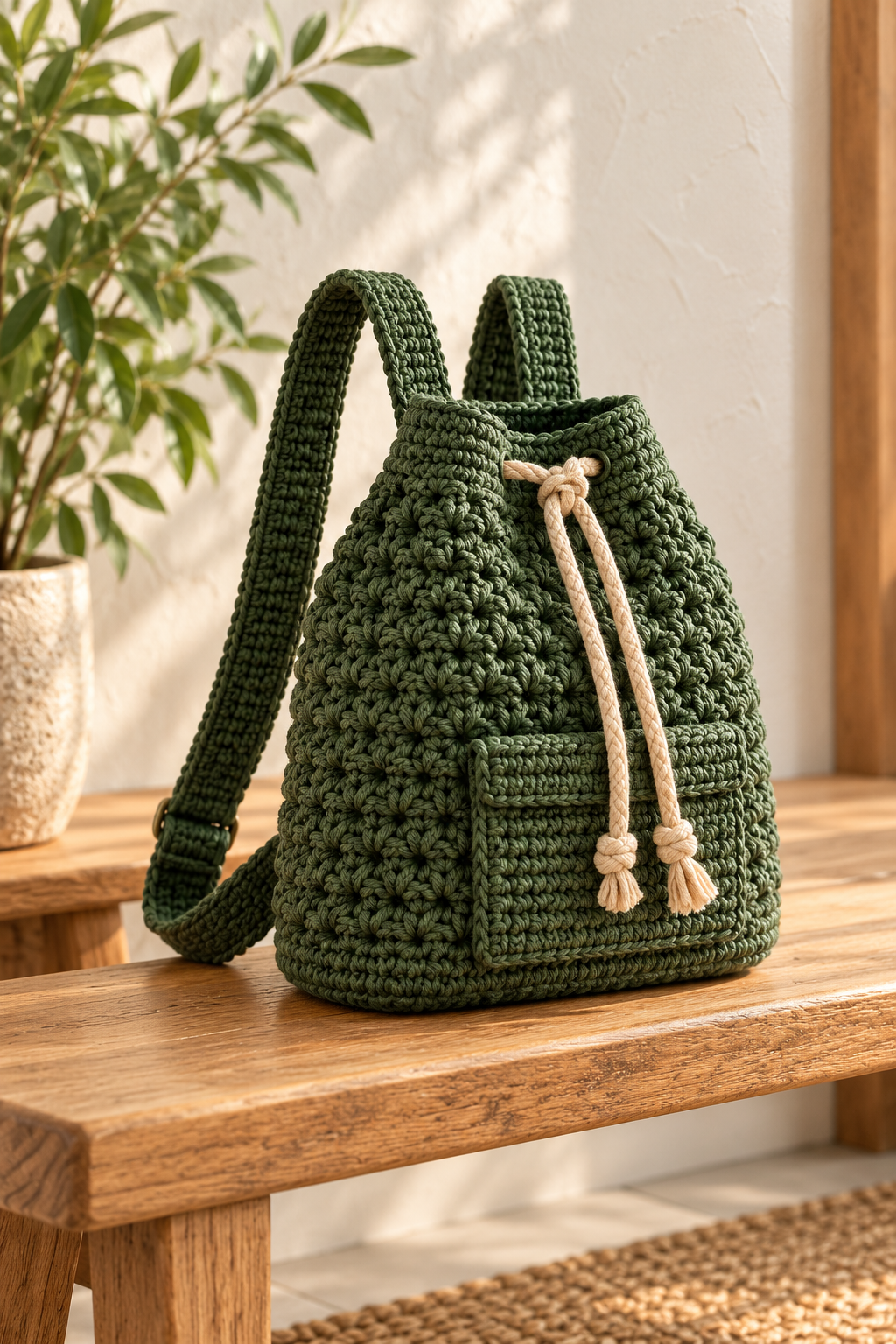
A compact forest-green backpack is a practical alternative to a shoulder bag. Start with a firm oval or rectangular base, work the body in a dense textured stitch, and add an eyelet round near the opening. A small front pocket keeps frequently used items easy to reach, while a cotton drawcord closes the top without stretching the crochet.
The straps carry the entire load, so crochet them around cotton webbing or line them with twill tape. Sew the lower ends through the bag shell, lining and an internal support patch. A lightweight lining also protects the crochet from pens, chargers and other hard-edged objects.
5. Dusty-Rose Crossbody Bag

This dusty-rose crossbody keeps the details quiet so the stitch texture can stand out. Crochet two matching half-moon panels in moss stitch, join them with a narrow gusset, and add a rounded flap. A wooden button suits the warm palette and keeps the closure simple.
Choose a tightly twisted cotton for clear stitches and a stable shape. The slim strap should be reinforced with cord or fabric tape to prevent it from lengthening. Add a fitted lining and one small interior pocket for a phone, cards and keys.
How to choose the right crochet bag
Start with how you will use it. Choose the hobo or crossbody for light everyday essentials, the granny-square tote for a colorful project bag, the mesh style for shopping and the backpack for hands-free carrying. Then match the fiber to the structure: cotton and cotton cord resist stretch, while softer blends suit relaxed shapes.
Three finishing choices improve almost every crochet bag:
- A stable base: use tight stitches and add a removable plastic-canvas insert when needed.
- Reinforced handles: extend attachments down the body and add cord, webbing or fabric tape.
- A fitted lining: protect seams, control stretch and keep small objects inside.
For more help, compare the best yarns for crochet bags, learn how to strengthen handles, and follow our guide to adding a fabric lining.
Frequently asked questions
Which of these bags is easiest for a beginner?
The blue striped market bag is the simplest because small variations in gauge are hidden by the mesh. Work the solid base carefully, count every mesh repeat and keep the upper band firm.
What yarn makes the strongest crochet bag?
Firm cotton, mercerized cotton and cotton cord are dependable choices. They resist stretching better than many soft garment yarns and show textured stitches clearly.
How do I keep a crochet bag from sagging?
Use a smaller hook for a dense gauge, reinforce the base, line the bag and support the handles internally. Structure comes from all four choices working together.
Should I block bag pieces before assembly?
Yes, especially granny squares and shaped panels. Block matching pieces to the same measurements so seams and gussets align without puckering.
Choose one idea and make it your own
A successful crochet bag does not need complicated construction. Pick one strong feature—an earthy color palette, floral motifs, mesh stripes, a useful pocket or a rounded silhouette—and keep the remaining details practical. Swatch first, reinforce the places that carry weight and finish the interior neatly. Those choices turn a beautiful handmade project into a bag you will actually use.