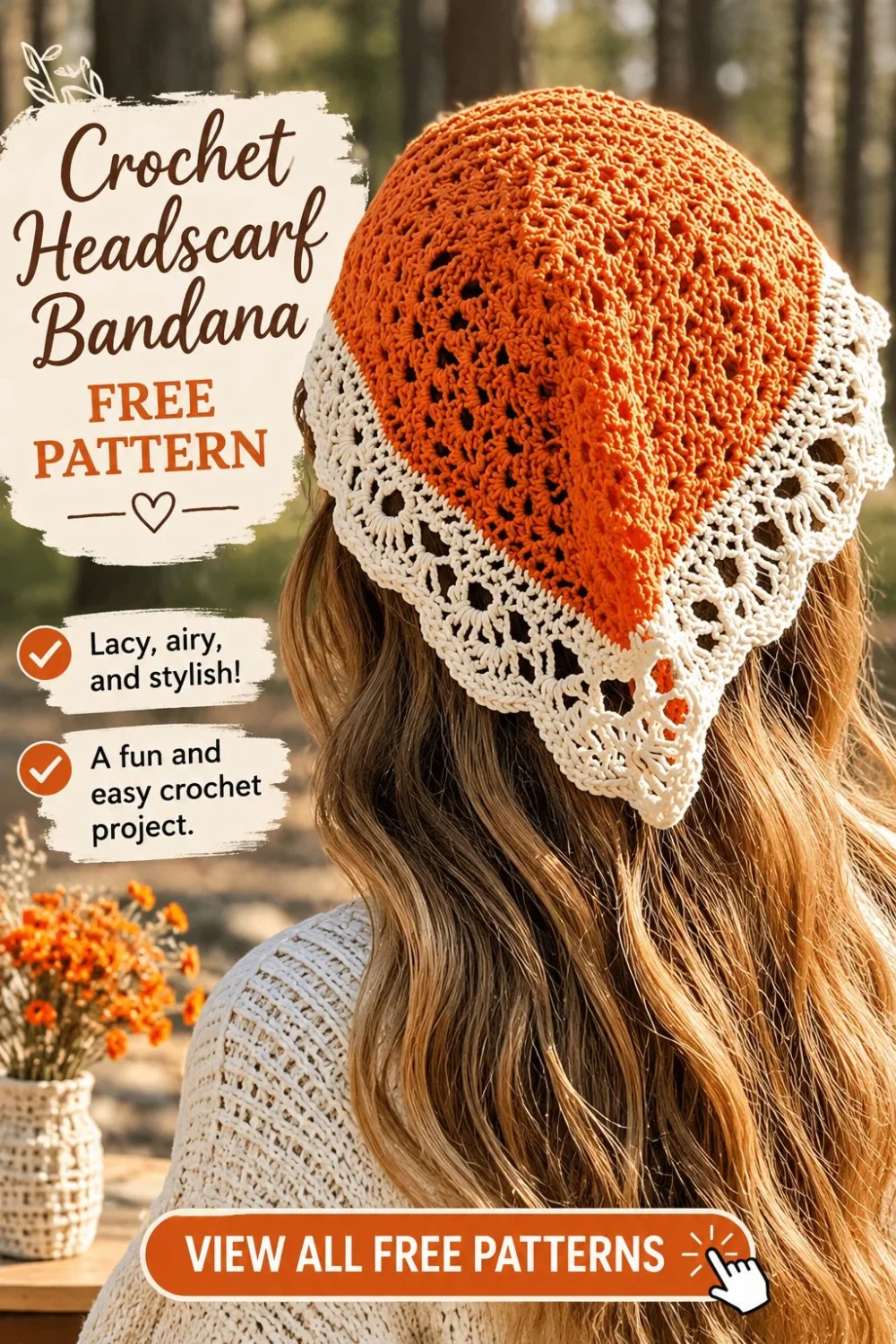
Head scarf crochet patterns are a wonderful way to create stylish, practical accessories with handmade character. Bandanas, kerchiefs, and lightweight wraps can add a colorful accent to an outfit, protect hair, or make thoughtful gifts for friends and family. Depending on the yarn and stitch pattern, a crocheted head scarf may be airy and delicate, textured and cozy, or simple enough for a quick weekend project. This tutorial is designed to help you plan and create a head scarf while keeping the construction clear and adaptable. Because no materials list or original crochet instructions were supplied, the technical pattern details below cannot be completed without inventing information.
Before You Begin
The supplied source does not include a materials list or original crochet instructions. As a result, there is no authoritative information about the scarf’s yarn, hook size, stitch pattern, dimensions, row count, edging, color changes, or finishing method.
A complete pattern cannot be written accurately without those details. The information below explains what is currently established and identifies the missing elements that are needed before crocheting.
Project Overview
| Feature | Details |
|—|—|
| Skill level | Cannot be determined from the supplied source |
| Construction | Not specified |
| Main techniques | Not specified |
| Components | Not specified |
| Finished size | Not specified |
| Special notes | Original instructions are required |
The project title indicates that the subject is a crochet head scarf, potentially including a bandana, kerchief, or wrap-style design. However, the title alone does not establish whether the piece is worked from the center outward, from one corner, across the widest edge, or in joined motifs.
The source also does not establish whether the scarf is made in rows, rounds, or separate sections. No instructions are available for shaping the triangular, rectangular, or wrap-style form.
Materials and Supplies
No materials or supplies were supplied with the pattern source.
Yarn Requirements
The yarn fiber, weight, color, yardage, and quantity are not specified. These details are essential because they affect the scarf’s drape, warmth, finished size, stitch definition, and care requirements.
| Yarn Color | Used For | Quantity |
|—|—|—|
| Not specified | Not specified | Not specified |
Crochet Hooks and Tools
The required tools are not listed in the source. Do not select a hook size or assume additional tools without the original instructions.
- Crochet hook size: not specified
- Yarn: not specified
- Scissors: not specified
- Yarn needle: not specified
- Stitch markers: not specified
- Blocking materials: not specified
A yarn needle and scissors are commonly useful for finishing crochet accessories, but they cannot be identified as required pattern supplies unless the original source confirms them.
Gauge and Finished Measurements
No gauge or finished measurements were provided.
| Measurement | Source information |
|—|—|
| Gauge | Not specified |
| Finished width | Not specified |
| Finished length | Not specified |
Without gauge information, it is not possible to determine how the completed scarf should compare with a sample. Without finished measurements, it is also not possible to confirm whether the design is intended as a small tied bandana, a larger kerchief, or a full wrap.
Crochet Abbreviations and Working Notes
No abbreviations were included in the supplied instructions. The following common US crochet abbreviations may appear in a future version of the pattern, but they are not part of the current source:
| Abbreviation | Meaning |
|—|—|
| ch | Chain |
| sc | Single crochet |
| hdc | Half double crochet |
| dc | Double crochet |
| tr | Treble crochet |
| sl st | Slip stitch |
| st(s) | Stitch(es) |
| rep | Repeat |
| sk | Skip |
| RS | Right side |
| WS | Wrong side |
| FO | Fasten off |
How to Read the Pattern
There are no rows, rounds, stitch counts, or repeat instructions to interpret. The source does not state whether turning chains count as stitches, whether the scarf is worked on the right or wrong side, or how the beginning of each row should be handled.
Before beginning, a complete pattern should specify:
- The starting chain or foundation method
- The first stitch worked into the foundation
- Whether the work is turned at the end of each row
- Whether turning chains count as stitches
- The stitch sequence for every row or round
- Any increase or decrease placement
- The final edging or border
- The fastening-off method
- How yarn ends are secured
- Any blocking or shaping instructions
Complete Crochet Pattern Instructions
No original crochet instructions were supplied. Therefore, no stitch-by-stitch pattern can be provided without fabricating technical details.
The following required information is missing:
Starting Method
The source does not state whether the head scarf begins with:
- A foundation chain
- A magic ring
- A chain-space center
- A corner
- A short edge
- Joined motifs
- Another construction method
Main Scarf Instructions
No rows or rounds were provided. There are no stitch sequences, repeat instructions, increases, decreases, color changes, or stitch counts to preserve.
A complete section would need to include each row or round in order, such as:
Row 1: Original source instruction required.
Row 2: Original source instruction required.
Row 3: Original source instruction required.
These placeholders are not crochet instructions and should not be used to make the project.
Edging or Border
No edging instructions were supplied. The source does not indicate whether the finished scarf has:
- A single-crochet border
- A decorative shell edge
- Picots
- Fringe
- Ties
- An attached band
- No edging
The border can significantly affect the appearance and size of a head scarf, so it should not be invented.
Color Changes
No color information was supplied. The source does not identify a main color, contrast color, striped sequence, gradient, or placement for color changes.
Finishing
No fastening-off, weaving-in, blocking, folding, or shaping instructions were included. These finishing details are especially important for a scarf because blocking may affect the drape and final dimensions.
Assembling Your Crochet Project
No assembly instructions were supplied.
If the intended design is a single crocheted scarf, it may not require assembly beyond finishing the yarn ends and shaping the fabric. However, the title alone does not confirm whether the project includes separate ties, a decorative center, a brim, a band, or joined motifs.
The source also does not explain:
- Whether separate pieces are made
- Whether any pieces are sewn together
- Where ties should be attached
- Whether the scarf should be folded or blocked
- How the finished ends should be secured
- Whether decorative elements should be added
These steps must come from the original pattern rather than being inferred from the project title.
Tips for a Neater Crochet Finish
Because the technical pattern is missing, the following are general preparation tips rather than instructions for this specific design:
Confirm the yarn weight before choosing a hook. Yarn thickness and hook size work together to determine the fabric’s drape and openness.
Make a gauge swatch when measurements matter. A scarf can become noticeably wider or narrower if your tension differs from the designer’s.
Mark the first stitch when working in rows or rounds. This helps prevent accidentally adding or losing stitches at the edges.
Count stitches at the end of every row. Edge stitches are easy to miss, particularly when working into chain spaces or textured patterns.
Keep increases symmetrical when the design is triangular. Uneven shaping can cause the scarf to twist or develop an irregular outline.
Avoid pulling fastening-off stitches too tightly. A tight final edge can distort the shape and make blocking more difficult.
Weave in yarn ends securely. Head scarves experience movement and repeated handling, so loose ends may work free if they are not properly secured.
Check the care instructions on the yarn label. Washing and drying methods can change the finished size and texture.
Frequently Asked Questions
Is this crochet head scarf pattern beginner-friendly?
The skill level cannot be determined because the original crochet instructions were not supplied. A simple bandana may use basic stitches and straightforward increases, while a decorative wrap may require lacework, color changes, or advanced shaping.
What yarn is recommended?
No yarn recommendation was included. The correct yarn should be identified from the original source, including its weight, fiber, color, and quantity.
Can I use another crochet hook size?
A different hook size may change the fabric’s drape, density, and finished dimensions. However, no original hook size or gauge was provided, so the effect cannot be calculated for this design.
What size will the finished scarf be?
The finished size is not specified. Measurements should be taken from the original pattern or calculated after the complete row and stitch instructions are available.
Can I customize the colors?
Color customization is usually possible for many crochet accessories, but the source does not provide a color sequence to adapt. Any changes should preserve the original construction and stitch instructions.
How can I prevent uneven edges?
Count every row, identify the first and last stitch clearly, and follow the source’s instructions about turning chains. Without the original pattern, it is not possible to confirm whether a turning chain counts as a stitch.
What should I do if my stitch count is incorrect?
Stop and recount the previous row before continuing. Check the first and last stitches, skipped stitches, chain spaces, and any increases or decreases. The original row instructions are necessary to identify the exact source of an error.
How should I wash the finished head scarf?
Follow the care instructions for the yarn used. Since the fiber content is not supplied, no specific washing or drying method can be recommended.
Your Next Stitch
A crocheted head scarf can be a useful, stylish handmade accessory, whether designed as a tied bandana, a classic kerchief, or a larger wrap. To turn this project into a complete publishable pattern, the original materials list and crochet instructions must be supplied. Those details will establish the yarn, hook, construction method, stitch sequence, shaping, finished size, edging, and finishing process. Once the complete source is available, it can be organized into a detailed beginner-friendly tutorial without guessing or changing the designer’s technical instructions.