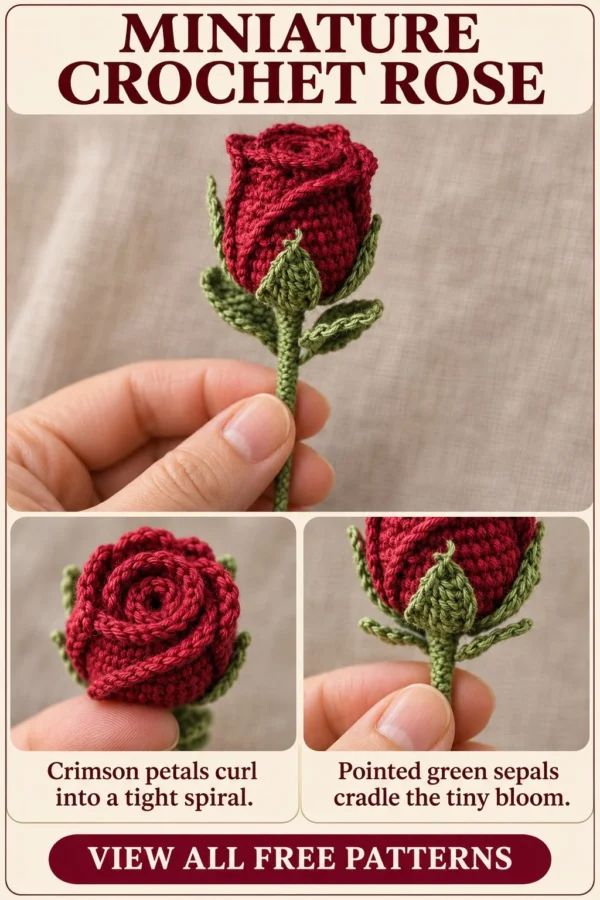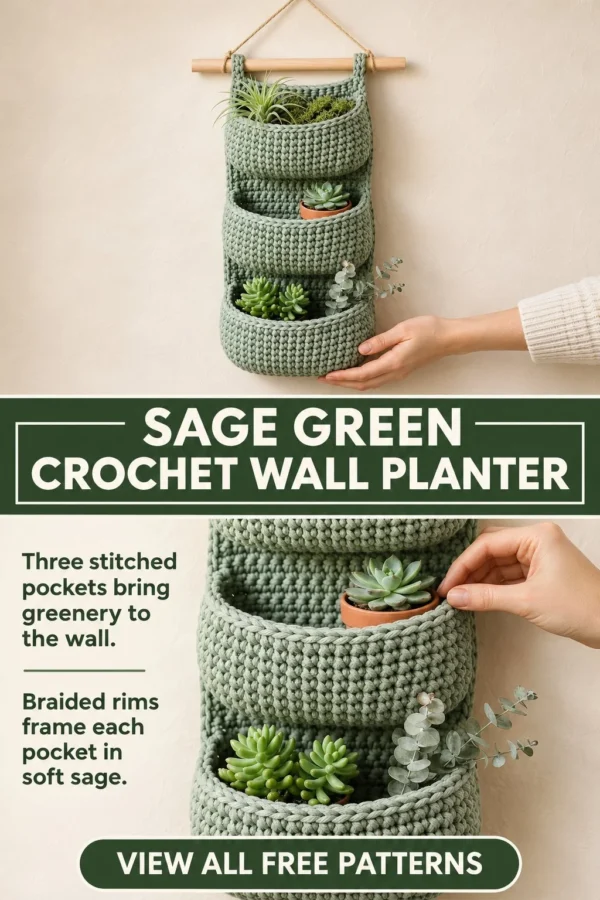
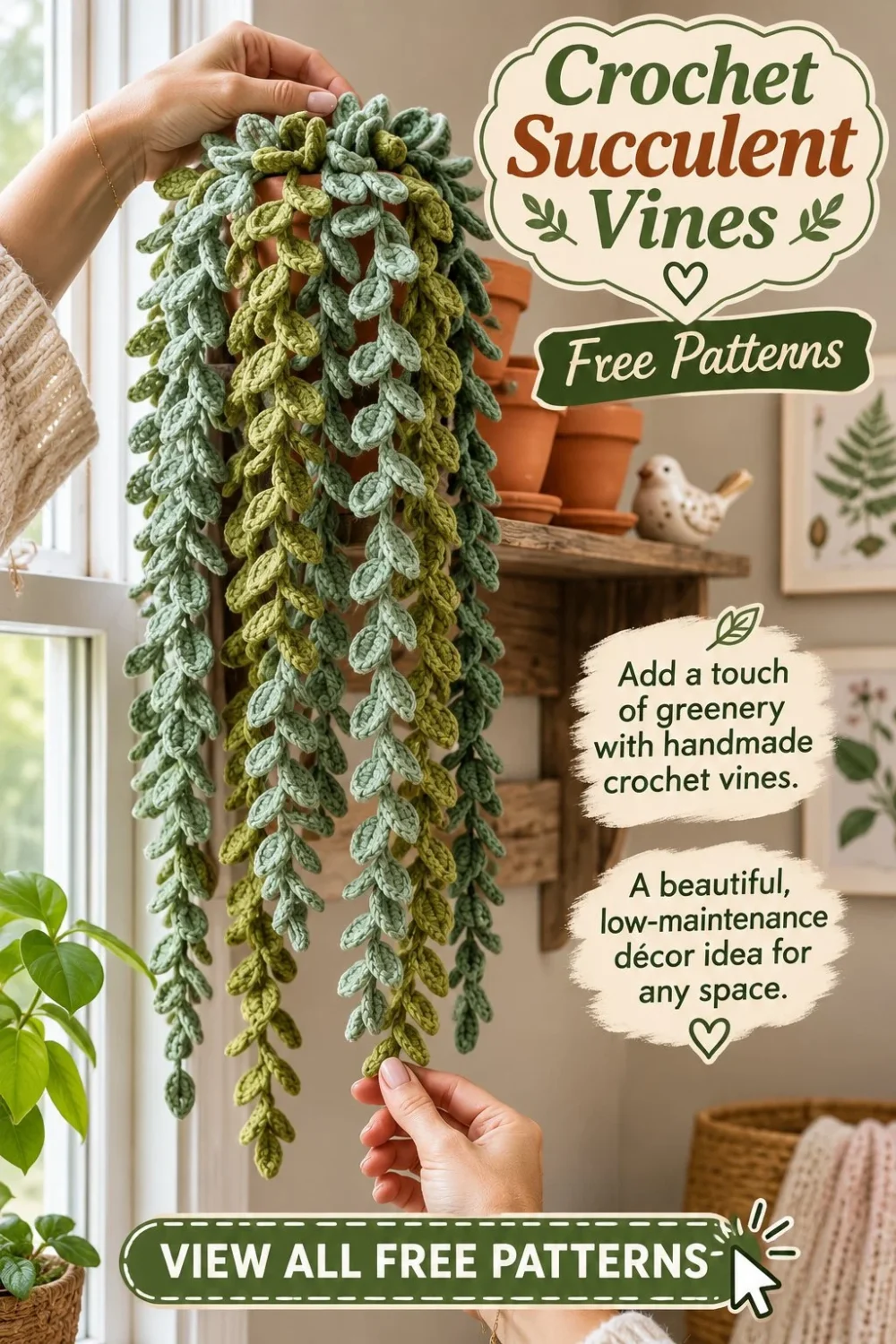
These crochet succulent vine patterns for home decor offer a simple way to create leafy, plant-inspired accents without watering or special lighting. The design is built from a chained vine worked with single crochet, while color and style changes can suggest different succulent varieties. Because the supplied instructions focus on a flexible vine structure rather than fixed measurements, you can adapt its length and appearance for shelves, baskets, wall displays, or handmade gifts. If you enjoy experimenting with small decorative crochet projects, you may also like these beginner-friendly crochet patterns. This tutorial explains the materials, construction sequence, finishing method, customization options, and important limits of the source instructions.
Before You Begin
This is a flexible decorative crochet vine made by chaining a length, working single crochet to create thickness, and finishing the ends. The source does not provide a yarn weight, hook size, stitch count, finished measurement, gauge, or named individual plant components. Those details should remain open so you can choose supplies that suit the scale and texture you want.
Project Overview
| Feature | Confirmed details |
|---|---|
| Skill level | Beginner-friendly techniques: slip knot, chain stitches, single crochet, finishing, and weaving in ends |
| Construction | Begin with a slip knot, chain a vine length, and work single crochet to create thickness |
| Components | One crocheted vine structure, with colors and styles varied to mimic different plants |
| Measurements | Not specified; the vine length is chosen by the maker |
| Gauge and hook size | Not specified |
The documented workflow is linear rather than a series of separately joined pieces. You establish the vine length with chains, add thickness with single crochet, customize the appearance through color or style choices, and finish by tying knots at the ends and weaving in the loose ends. Since no joining, leaves, flowers, or separate succulent sections are described, this article does not add them to the pattern.
The technique level is approachable for a new crocheter who can maintain a chain and identify where to place single crochet stitches. Completion time cannot be estimated responsibly because the source does not specify the chain length, yarn size, hook size, or finished dimensions.
Materials and Supplies
Yarn Requirements
| Yarn color | Used for |
|---|---|
| Color of your choice | The crocheted vine |
| Additional colors of your choice | Optional color and style variations that mimic different plants |
The source identifies yarn but does not specify fiber, weight, brand, color names, or quantity. Select a yarn that gives the texture and scale you want for home decor. A smoother yarn can make the single crochet texture easier to see, while a textured yarn can create a softer, more organic appearance. Keep in mind that changing yarn weight or hook size will change the vine’s thickness and drape.
Crochet Hooks and Tools
- Yarn
- Crochet hook
- Scissors
- Tapestry needle
Choose the crochet hook according to the yarn and the fabric you want, because the source does not prescribe a size. The scissors are used to cut the working yarn, and the tapestry needle is used to weave in ends. No stuffing, wire, floral tape, plant pot, or additional joining materials are included in the supplied materials.
Gauge and Finished Measurements
No gauge or finished measurement is supplied. For this project, the chain length controls the overall vine length, while the yarn, hook, and single crochet tension affect thickness and flexibility. Make the chain as long or short as needed for your intended display, but remember that the source does not provide a stitch count or measurement to reproduce.
Crochet Abbreviations and Working Notes
| Abbreviation | Meaning |
|---|---|
| ch | Chain |
| sc | Single crochet |
How to Read the Pattern
The instructions below are written as a sequence rather than numbered rounds because the source does not identify rounds, rows, stitch counts, or turning instructions. “Chain a length for the vine” means that you decide how long the foundation should be. “Use single crochet stitches to create the desired thickness” describes the thickening method but does not state a specific number of stitches, rows, or passes.
Use a consistent grip and keep your chain loose enough to work into without stretching it. If you are unsure where a single crochet belongs, pause and identify the next available chain or stitch before continuing. Stitch markers are not required by the source, but one can mark the working end if you set the project down. Because no stitch totals are supplied, there are no parenthetical counts to check against.
Complete Crochet Pattern Instructions
The following instructions preserve the complete supplied construction order. The pattern is intentionally flexible: it gives the required techniques but leaves the yarn choice, chain length, and exact thickness to the maker.
Main Crochet Succulent Vine
Yarn: Choose your yarn. The source does not specify a color, yarn weight, fiber, brand, or quantity.
Hook: Use a crochet hook appropriate for your chosen yarn. A hook size is not supplied in the original instructions.
Quantity: The source describes the vine as a single crochet project and does not specify multiple identical pieces.
Construction: Work in the documented order: create a slip knot, chain a length for the vine, use single crochet to create the desired thickness, incorporate color or style variations if desired, and finish the ends.
Starting the Vine
Step 1: Choose your yarn and create a slip knot.
Make the slip knot securely on the crochet hook without tightening it so much that the hook cannot move freely. The source does not specify a starting chain count, so select a length based on the intended decorative use.
Creating the Vine Length
Step 2: Chain a length for the vine.
Continue making chain stitches until the foundation reaches the length you want. The original instruction does not provide an exact number of chains or a finished measurement. Keep the chain tension even so the vine does not narrow or widen unpredictably along its length.
Adding Thickness with Single Crochet
Step 3: Use single crochet stitches to create the desired thickness.
Work single crochet stitches along the chained vine to build its thickness. The source does not specify how many single crochet stitches to work, how many rows or passes to make, or whether the work should be turned. Therefore, adjust the single crochet construction according to the thickness and flexibility you want, while keeping your tension consistent from one section to the next.
As you work, check that the chain remains reasonably straight and that the single crochet fabric does not develop accidental gaps. If the vine becomes too firm, loosen your tension or use a larger hook; if it becomes too loose, more consistent tension or a smaller hook may create a denser texture. These are customization choices rather than corrections to a missing stitch count.
Adding Plant-Inspired Color and Style
Step 4: Incorporate various colors and styles to mimic different plants.
The source allows different colors and styles but does not state exact color-change positions or a required sequence. You may use one color for a unified vine or introduce additional colors for a more varied succulent-inspired appearance. Since no color placement is documented, keep any changes consistent with your chosen visual design rather than treating them as fixed pattern instructions.
When changing colors, secure each transition neatly and avoid pulling the yarn tightly enough to distort the chain or single crochet fabric. If you use several colors, compare the sections as you work so the overall vine has a balanced appearance. Do not add leaves, flowers, or separate plant parts unless you are intentionally adapting the design beyond the supplied pattern.
Finishing the Vine
Step 5: Finish off by tying knots at the end and weaving in ends.
At the end of the crocheted vine, finish off by tying knots at the end as directed in the source. Then use the tapestry needle to weave in the yarn ends. The original instructions do not specify a particular knot type, tail length, joining method, or method for hiding ends, so do not assume a more detailed finishing sequence than the source provides.
Beginner Guidance for the Vine
The finished shape should be a flexible, plant-inspired crocheted vine whose length comes from the chain and whose thickness comes from the single crochet work. Because the source leaves both length and thickness open, there is no single required appearance or stitch total to verify.
To maintain an even result, watch the size of your chain loops and the height of each single crochet. Missed stitches can create thin spots, while extra stitches can create bumps. If the vine looks uneven, compare nearby sections and gently smooth the fabric before deciding whether the issue comes from tension or stitch placement.
There are no increases, decreases, stuffing stages, separate pieces, or specified symmetry checks in the supplied pattern. The design’s visual character comes from the chain length, single crochet thickness, and optional colors or styles.
Assembling Your Crochet Project
The supplied pattern does not describe a separate assembly stage or joining process. Once the single crochet work is complete, the documented finishing method is to tie knots at the end and weave in the ends with a tapestry needle.
For display, arrange the completed vine in the location you prefer, such as across a shelf, around a basket, or within another home decor arrangement. Exact placement, attachment points, and measurements are not provided, so those choices remain part of your personal styling. Avoid presenting an added pot, hanger, wire, or adhesive as part of the original crochet instructions.
Before displaying the project, inspect the vine for loose ends and gently straighten any sections affected by uneven tension. If you made multiple color or style sections, check that the transitions look intentional. The source requires weaving in ends but does not specify additional securing methods.
Tips for a Neater Crochet Finish
- Keep the foundation chain steady: An even chain helps the vine maintain a consistent base instead of developing tight and loose sections.
- Do not over-tighten single crochet: Extremely tight stitches can make the vine stiff and difficult to shape for display.
- Check for skipped stitches: A missed stitch may create a visibly thin area, so inspect the fabric periodically rather than waiting until the end.
- Choose colors before starting: Planning your palette helps the optional plant-inspired variations look deliberate.
- Keep color transitions tidy: Avoid pulling new color sections too tightly, since this can pucker the chain or single crochet.
- Use the hook that suits your yarn: Since no size is prescribed, select a hook that produces the thickness and flexibility you want.
- Weave in ends carefully: Loose ends can distract from the decorative shape, so secure them with the tapestry needle after tying the required knots.
- Remember the pattern is flexible: There are no supplied measurements or stitch counts, so judge the vine by its intended display rather than by an invented standard.
Frequently Asked Questions
Is this crochet succulent vine pattern beginner-friendly?
Yes, the documented techniques are simple: create a slip knot, chain, work single crochet, tie knots at the end, and weave in ends. Beginners should note that the source leaves the chain length and thickness open, so the project requires some personal judgment.
What yarn should I use?
The source only requires yarn and does not name a fiber, weight, brand, color, or quantity. Choose a yarn that suits the size, texture, and color scheme you want for your home decor vine.
What crochet hook size is required?
No hook size is supplied. Use a crochet hook appropriate for your selected yarn, keeping in mind that the hook affects the thickness, firmness, and flexibility of the single crochet fabric.
How long should the vine be?
The original pattern does not specify a length or chain count. Chain until the vine reaches the size needed for your intended display, remembering that the final appearance also depends on yarn and tension.
Can I use several colors?
Yes. The source specifically allows various colors and styles to mimic different plants. It does not prescribe color-change positions, so you can develop a palette that suits your decor while keeping the construction order unchanged.
How can I prevent uneven thickness?
Maintain consistent chain tension and work each single crochet carefully into the appropriate location. Check the vine as you go for skipped stitches, extra stitches, tight sections, or loose sections. Because no stitch count is provided, visual consistency is the main guide.
What should I do if I want a fuller vine?
The source says to use single crochet to create the desired thickness, but it does not define a specific number of passes or stitches. You may adjust the single crochet construction to create the thickness you prefer, while recognizing that this is an adaptation rather than a prescribed measurement.
How do I care for the finished decor?
Care depends on the yarn you choose, and the source does not provide fiber information. Follow the care instructions on your yarn label and handle the finished vine gently so the single crochet fabric and woven ends remain secure.
Conclusion
This flexible crochet succulent vine is an inviting home decor project because its length, thickness, colors, and plant-inspired styling can be adapted to your space. The essential construction remains simple: begin with a slip knot, chain the vine, use single crochet to build thickness, add optional color or style changes, and finish by tying knots and weaving in the ends. Once you understand that foundation, you can explore other botanical-inspired designs, including this crochet trailing vine plant pattern, for another decorative direction.