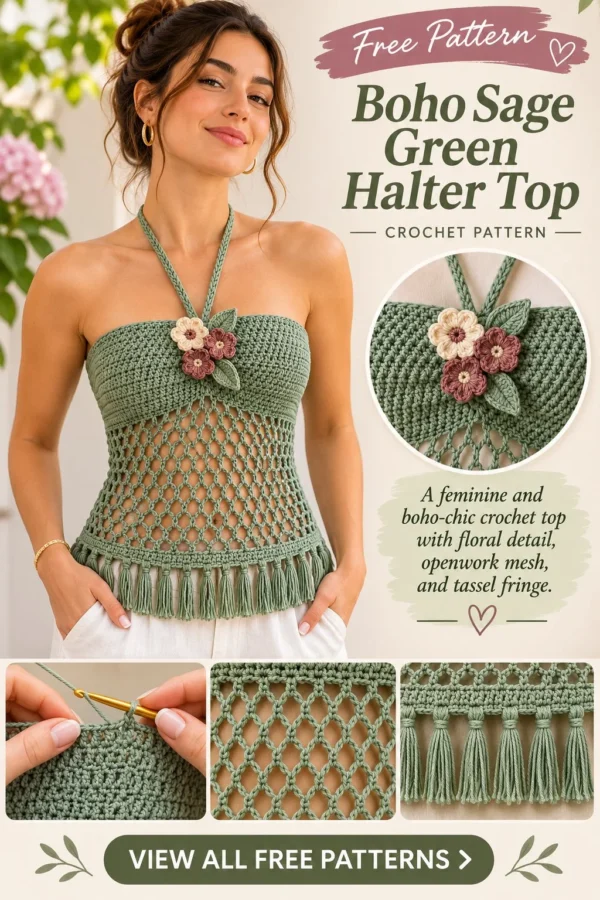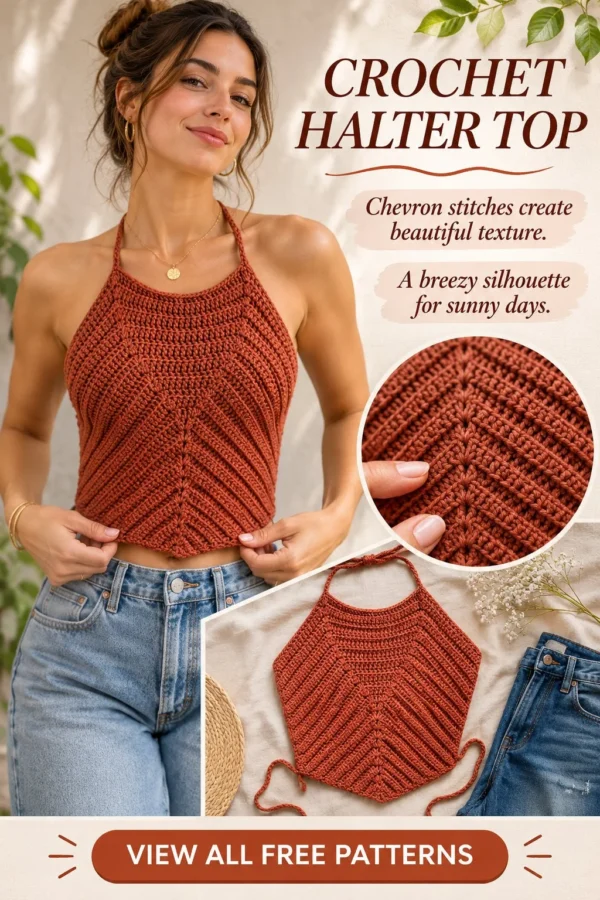

Crochet summer accessories are a wonderful way to add handmade style to warm-weather outfits, beach days, picnics, and relaxed weekends. Lightweight crochet pieces can be colorful, practical, and quick to make, while details such as openwork, flowers, textured stitches, or decorative edging give each accessory a distinctive finish. They also make thoughtful handmade gifts because colors and sizes can often be adapted to suit the recipient. This guide explains how to plan a collection of crochet summer accessories, choose appropriate materials, read pattern instructions, and create polished finished pieces. Because no original crochet instructions or materials list was supplied, the article provides planning guidance rather than a complete stitch-by-stitch pattern.
Before You Begin
This project title refers to a collection of crochet summer accessories rather than one specific documented design. The supplied source does not identify a particular accessory, yarn, hook, stitch pattern, finished measurement, or construction method.
As a result, the technical details below are limited to general planning information. A complete pattern requires original instructions for each accessory, including stitch counts, rows or rounds, color changes, finishing, and assembly.
Project Overview
| Feature | Details |
|—|—|
| Skill level | Cannot be determined from the supplied source |
| Construction | Not specified |
| Main techniques | Not specified |
| Components | Not specified |
| Finished size | Not supplied |
| Special notes | Original crochet instructions are required for a complete pattern |
Summer accessories may include items such as headbands, sun hats, market bags, scarves, shawls, jewelry, sandals, or small pouches. Each type uses different shaping and construction methods, so the correct workflow depends on the specific design.
Materials and Supplies
No materials and supplies were provided in the source. Do not begin a specific project until the pattern identifies the required yarn, hook, and tools.
Yarn Requirements
Because no yarn information was supplied, there are no source-based colors, weights, fiber contents, quantities, or yardage requirements to list.
For a future pattern, the materials table should identify each yarn color, its purpose, and the required quantity. For example, a documented pattern might distinguish between a main color, contrast color, edging color, or decorative color. Those details must come from the original pattern rather than being assumed.
Crochet Hooks and Tools
The source does not specify any required tools.
Depending on the eventual accessory pattern, tools may include:
- Crochet hook
- Yarn needle
- Scissors
- Stitch markers
- Measuring tape
- Blocking supplies
- Buttons, beads, or other closures when documented
These items should be confirmed against the completed pattern instructions before publication.
Gauge and Finished Measurements
No gauge or finished measurements were supplied.
Gauge is especially important for wearable summer accessories and bags. A tighter gauge can create a firmer fabric and a smaller finished piece, while a looser gauge can produce a softer, more open fabric and a larger result. The hook size should therefore be selected from the documented pattern or adjusted only after making a gauge swatch.
Crochet Abbreviations and Working Notes
No abbreviations were used in the supplied source because no crochet instructions were provided.
A completed pattern may use standard US crochet abbreviations such as:
| Abbreviation | Meaning |
|—|—|
| ch | Chain |
| sc | Single crochet |
| hdc | Half double crochet |
| dc | Double crochet |
| sl st | Slip stitch |
| st(s) | Stitch(es) |
| rep | Repeat |
| inc | Increase |
| dec | Decrease |
| Rnd | Round |
| FO | Fasten off |
Only abbreviations that appear in the actual instructions should be included in a finished pattern.
How to Read the Pattern
When complete instructions are available, each row or round should clearly identify:
- The row or round number
- The stitch sequence
- Any repeated section
- The expected stitch count
- Color changes
- Turning instructions
- Whether a chain counts as a stitch
- Whether the work is joined or continued without joining
A stitch marker can help identify the beginning of a continuous round. In flat-row construction, turning at the end of each row is essential unless the instructions state otherwise. Repeated directions are typically placed between asterisks, and the number in parentheses at the end of a row or round indicates the expected stitch total.
Complete Crochet Pattern Instructions
No original crochet instructions were supplied, so a complete stitch-by-stitch pattern cannot be written accurately.
The missing source should establish the following information for every accessory:
- The accessory’s name
- Yarn color and quantity
- Yarn weight and fiber, if relevant
- Hook size
- Gauge, if required
- Finished measurements
- Starting chain, magic ring, or other foundation
- Every row or round
- Stitch counts
- Increases and decreases
- Color changes
- Repeated sections
- Number of identical pieces
- Joining method
- Fastening-off instructions
- Finishing and assembly details
Inventing these details would create a new pattern rather than preserve the supplied source. The instructions below therefore explain what should be documented for the most common summer accessory components without presenting them as part of the missing pattern.
Headbands and Hair Accessories
A crochet headband may be worked as a flat strip, in joined rounds, or as a continuous tube. The pattern should identify the foundation chain, row count, width, length, edging, and joining method.
If the design uses a flat strip, the instructions must specify whether the starting chain represents the finished width or length. The pattern should also state whether the ends are sewn together, joined with slip stitches, or finished with a button or another closure.
Decorative flowers, leaves, bows, or buttons should be documented as separate components. Their placement must not be guessed because even small changes can affect the accessory’s appearance and fit.
Crochet Sun Hats
A crochet sun hat generally requires crown increases followed by side rounds and a brim. A complete source pattern must provide the increase sequence, the point at which the crown stops increasing, the number of side rounds, and the shaping of the brim.
The instructions should also identify whether the hat is worked in continuous or joined rounds. Stitch markers are particularly useful for continuous rounds because the beginning of each round can shift slightly if the work is not marked.
The brim may require evenly distributed increases to prevent curling. If wire, stiffening, or a particular edging is required, that information must be included in the original materials and finishing instructions.
Crochet Market Bags
A market bag may begin with a flat base, a circular base, or a chain foundation. The pattern should identify the exact base dimensions and how the openwork body is formed.
Mesh patterns often depend on accurate chain spaces. Missing or adding one space can make the sides twist, widen unevenly, or fail to align with the handles. A complete pattern should state the number of chain spaces or stitches after each relevant round.
Handles may be worked as part of the body or attached separately. The source must specify their length, width, placement, and joining method.
Crochet Scarves and Lightweight Shawls
A scarf or shawl may be worked in rows from one end to the other, from the center outward, or along a long foundation chain. The pattern should clearly identify the turning chain, row repeats, border, and final dimensions.
Openwork designs require careful attention to chain spaces and skipped stitches. Blocking may improve the drape and make the stitch pattern more visible, but blocking instructions should be included only when appropriate for the yarn and documented design.
Crochet Jewelry and Small Accessories
Small summer accessories such as bracelets, necklaces, anklets, and coin pouches often use fine yarn or thread. A complete pattern should specify the finished length, closure, joining technique, and any beads or findings.
If beads are incorporated during crocheting, the source must explain when they are added. If they are sewn on afterward, the pattern should document their placement and the method used to secure them.
Assembling Your Crochet Project
Assembly instructions cannot be completed from the supplied source because no components or joining methods were documented.
For a complete article, assembly should follow the original construction order. A clear assembly section would explain:
- Which pieces must be completed first
- Whether pieces should be blocked or shaped
- How components are aligned
- Which stitch or sewing method joins them
- Where decorative details are attached
- How yarn tails are woven in
- Whether closures, buttons, or other findings are added
- How the finished accessory is checked for symmetry and fit
Exact positioning should come from the original instructions. For example, the location of a flower on a headband, the distance between handles on a bag, or the placement of a button should not be invented.
If an accessory is worked as one continuous piece, the assembly section should say so clearly and describe only the documented finishing steps.
Tips for a Neater Crochet Finish
The following general tips may help when working from a complete summer-accessory pattern:
Check the stitch count frequently. Small errors can become more noticeable in shaped accessories, especially hats, bags, and fitted bands.
Use a stitch marker in continuous rounds. Marking the first stitch makes it easier to identify the beginning of each round and maintain consistent shaping.
Match the hook to the intended fabric. A smaller hook usually creates firmer fabric, while a larger hook creates a looser and more flexible fabric. Adjustments can change the final dimensions.
Keep chain spaces consistent. In lace and mesh designs, uneven chain spaces can make the accessory look distorted even when the stitch count is correct.
Measure during construction. Check length and width before fastening off, especially for wearable accessories and handles.
Secure yarn ends carefully. Summer accessories may receive frequent use, so yarn tails should be woven through several stitches on the wrong side whenever the completed pattern permits.
Join pieces with matching tension. Overly tight sewing can pucker the fabric, while loose joining can leave gaps or weak seams.
Follow the yarn-care label. Natural fibers, synthetic fibers, and blends may respond differently to washing, steam, and blocking.
Frequently Asked Questions
Is this crochet summer accessories pattern beginner-friendly?
The supplied source does not contain a specific pattern, so its difficulty cannot be determined. A beginner-friendly version should include clearly numbered rows or rounds, stitch counts, defined abbreviations, and detailed finishing instructions.
What yarn is recommended?
No yarn was supplied. The correct yarn depends on the accessory. Lightweight cotton is often suitable for structured summer items, while a softer blend may be better for scarves or shawls. The yarn should be selected from the completed pattern requirements rather than assumed.
Can I use another crochet hook size?
Possibly, but changing hook size affects gauge, fabric density, drape, and finished dimensions. A gauge swatch should be made before changing the recommended hook, particularly for fitted accessories.
What size will the finished project be?
No finished measurements were provided. A reliable size can be stated only after the original pattern supplies measurements or enough information to calculate them accurately.
Can I customize the colors?
Color customization is generally possible, provided the design does not depend on a specific color-change sequence. The original color placement should be documented first so substitutions do not alter the construction instructions.
How can I prevent uneven stitches?
Maintain consistent tension, avoid pulling loops too tightly, and count stitches regularly. In openwork patterns, also check that chain spaces and skipped stitches are made evenly.
What should I do if the stitch count is incorrect?
Stop before continuing and review the previous row or round. Look for missed increases, accidental skipped stitches, misplaced decreases, or stitches worked into a turning chain when it should not count. Correcting the error early is usually easier than trying to compensate later.
How should I wash the finished accessory?
Follow the care instructions for the actual yarn used. If no yarn has been specified, avoid promising a particular washing method. A yarn label will usually indicate whether hand washing, machine washing, air drying, or another treatment is appropriate.
Your Next Stitch
Crochet summer accessories can be practical, stylish, and wonderfully personal, but accurate construction depends on complete source instructions. Before beginning, confirm the yarn, hook, stitch sequence, measurements, and finishing details for the specific design. Once those details are available, the project can be organized into clear components and followed with confidence. Choose colors that reflect the season, work at a steady tension, and take time to check your measurements as you go. A carefully finished accessory can become a favorite warm-weather essential or a thoughtful handmade gift.